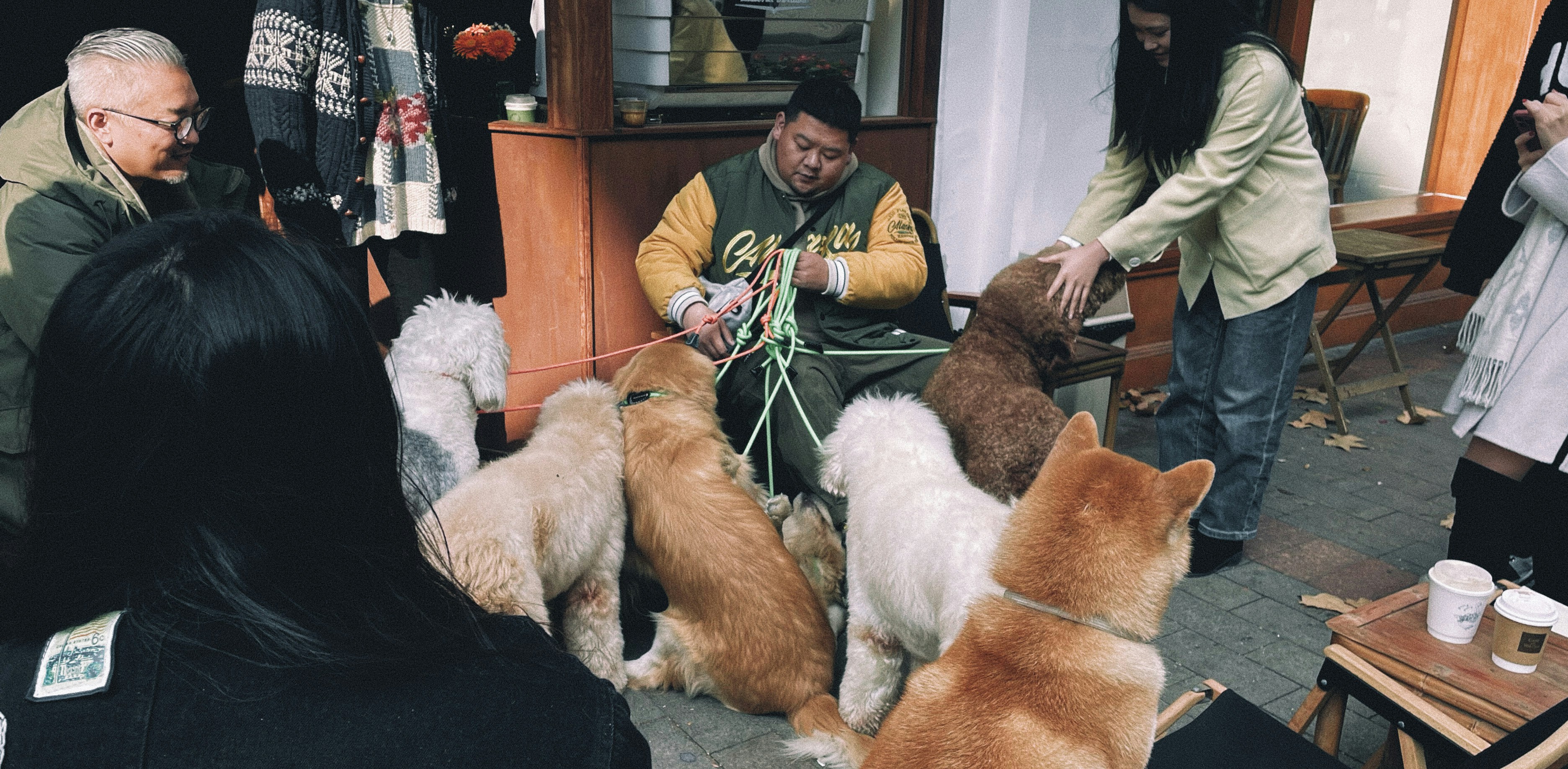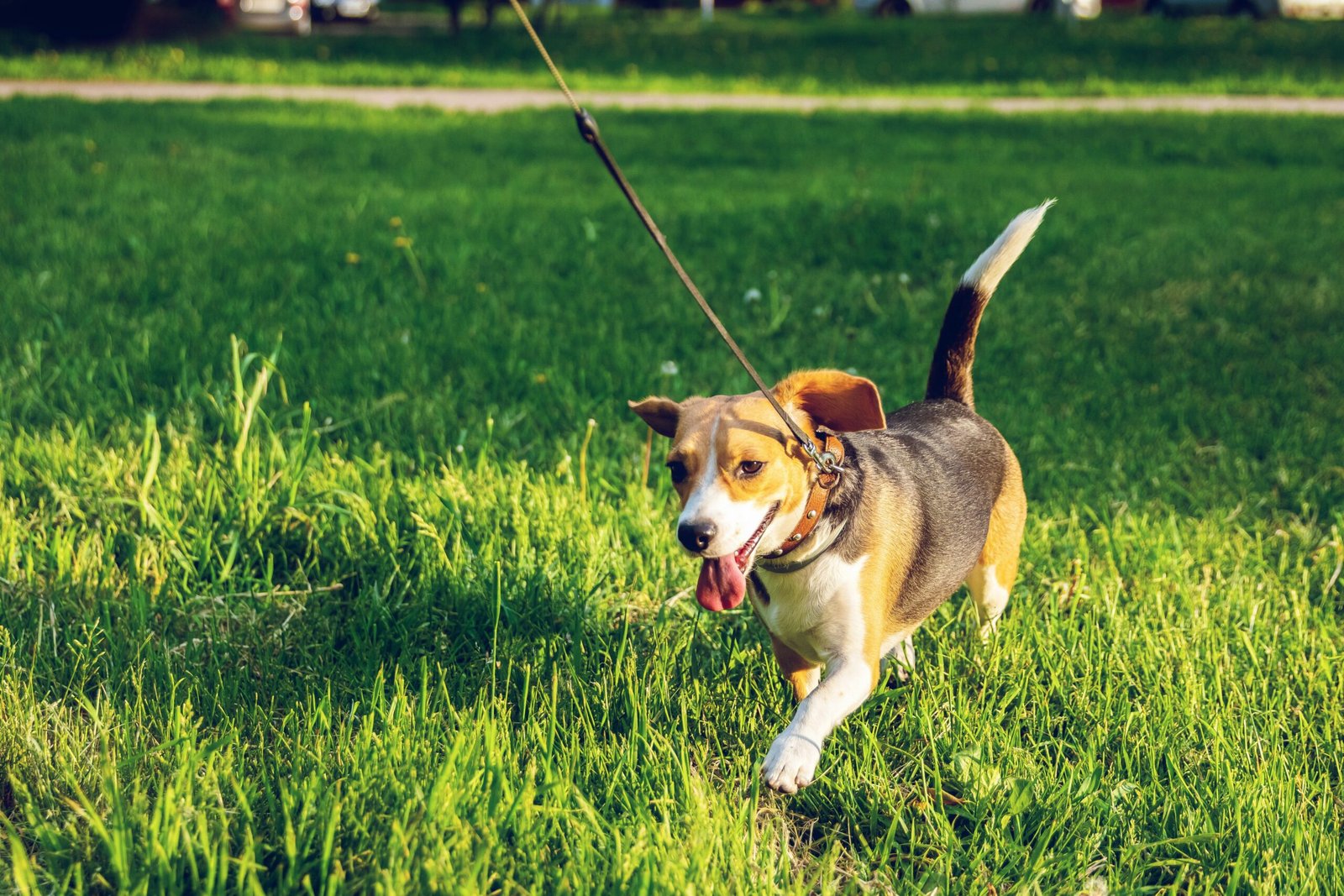
Your dog is fine at home. Fine in the yard. Then a dog appears two hundred yards down the street and it becomes a barking, lunging animal at the end of the leash while you apologize to strangers.
That is leash reactivity, and the first thing worth knowing is that it is usually not aggression. Most reactive dogs have no interest in fighting. They are frightened, or they are frustrated because they desperately want to greet and cannot. Both look identical from the outside, and both get worse with the same well-meant mistakes.
If you are considering a second dog with a reactive resident dog, read how to introduce a second dog first.
Short answer: work out first whether your dog is frightened or frustrated, because the two need different plans. Then find the distance at which it will still eat with another dog in view, and do all your training there. Feed continuously while the other dog is visible and stop when it goes. Manage walks so the reaction never gets rehearsed. Expect weeks to months, and rule out pain first if this started suddenly in an adult dog.
Fear or frustration? The question that changes everything
Two dogs can produce the same explosion for opposite reasons, and the plan differs.
The frustrated greeter
Wants to reach the other dog. Body leans forward, tail high and fast, sometimes whining or squealing between barks. Often fine off-leash, and fine at the park. The lead is the problem, not the other dog.
The tell: if your dog plays happily with other dogs off-leash but explodes on-leash, this is your version. The barrier is creating the behavior.
The frightened dog
Wants distance. Body weight shifts back, tail lower, ears back, sometimes retreating first and only exploding when it cannot get away. Often freezes for a moment before the outburst.
The tell: it is no better off-leash. Given the choice, it avoids other dogs entirely.
Reading this correctly matters, because a frustrated dog is often helped by controlled greetings later on, while a frightened dog would find that terrifying. Our guide to reading dog body language covers the postures in detail.
Reactivity is one of five distinct problems owners describe as anxiety, and it is the one most often driven by frustration. See the five types of dog anxiety.
Fear and frustration, side by side
The outburst looks the same. Almost everything else differs, including what you should aim for.
| Frustrated greeter | Frightened dog | |
|---|---|---|
| Body | Leaning forward, tail high and fast | Weight back, tail low, ears back |
| Sound | Whining or squealing mixed with barking | Deeper barking, sometimes a growl first |
| Off leash | Usually fine, often playful | Avoids other dogs given the choice |
| Before the outburst | Straining, bouncing, no pause | A freeze, a stare, then the explosion |
| Recovery | Fast once the dog has passed | Slow, may stay tense for the rest of the walk |
| Realistic goal | Calm passing, possibly controlled greetings later | Calm passing at a comfortable distance |
| What makes it worse | Being allowed to drag toward some dogs and not others | Any forced proximity at all |
Mixed presentations are common, especially in adolescents who started frustrated and had a bad experience. When in doubt, treat the dog as frightened. That plan is safe for both; the reverse is not.
Two things to rule out before any training
Pain. If this started suddenly in an adult dog, see a vet first. There is a documented association between musculoskeletal pain and behavior problems, and around a third of dogs referred for behavior work have a painful condition. A dog that hurts has a lower threshold for everything, and no amount of counter-conditioning fixes an untreated joint.
Equipment that adds pain. Covered below, and it is the single most common way owners accidentally make this worse.
Free tool
Dog Recall Reliability Calculator
Answer six questions and it works out whether your dog is frightened or frustrated, estimates a starting distance in yards, and lays out a six-week plan.
Threshold: the only concept you actually need
Your dog’s threshold is the distance at which it can see another dog and still think — still take food, still respond to you, still choose to walk away.
Below threshold, learning happens. Above it, the dog is flooded with stress hormones and nothing goes in. Worse, every over-threshold episode rehearses the behavior and makes the next one more likely.
Find your number. At what distance will your dog still eat a piece of chicken while another dog is visible? That distance is where all the work happens.
Most owners guess far too low. For many reactive dogs the honest answer is thirty, fifty, or a hundred yards at the start. If your dog will not take food, you are too close — that is the test, and it is more reliable than watching for barking.
The protocol
Desensitization plus counter-conditioning: change what another dog predicts, rather than trying to suppress the reaction.
- Position yourself at threshold distance where you can see dogs coming with plenty of warning. A quiet parking lot at the edge of a park works better than a narrow sidewalk.
- The instant your dog notices another dog, start feeding. Continuously, high value, one piece after another. Not as a distraction, and not conditional on your dog looking at you.
- When the other dog is gone, the food stops. This is the whole mechanism: other dog appears, chicken rains from the sky; other dog leaves, chicken stops.
- Watch for the change. After enough repetitions your dog will see a dog and immediately turn to you in anticipation. That look is the goal. It means the association has shifted.
- Only then close the distance — a yard or two, held for several sessions before moving again.
- If your dog reacts, you were too close. Not a failure, just information. Add distance and continue.
Marking the look
A refinement worth adding once your dog can stay under threshold: mark the moment your dog looks at the other dog calmly, then pay. You are rewarding calm observation rather than only feeding through it.
The sequence is: dog notices → you say yes → dog turns to you → food. Many dogs start deliberately glancing at the trigger and turning back, which is exactly the habit you want on a real walk.
Setting up a session you control
Walks are unpredictable. Training needs a setup where you decide what appears and when.
- Pick a place with sightlines and escape room. The edge of a parking lot beside a park, a school field on a weekend, a wide industrial road. Somewhere you can add thirty yards without being trapped.
- Use a helper dog if you can find one. A calm, neutral dog walked back and forth at a set distance by a friend is worth ten accidental encounters. Agree the distance before you start and agree that they never come closer without you asking.
- If you have no helper, work at the edge of dog traffic. Sit on a bench far from a park entrance and work with whatever passes.
- Bring more food than you think. A fifteen-minute session can use a whole chicken breast. Running out mid-session is worse than not starting.
- Take a long line and a front-clip harness. The line gives your dog room to turn away without you pulling.
- Have an exit planned. Know which direction you go if a loose dog appears, before it does.
What to do in the moment
Training happens in planned sessions. Walks are for management, and these are the tactics that keep a walk from becoming a rehearsal.
- See them first. Scan ahead constantly. The whole game is spotting the other dog before your dog does.
- Cross the road early, before your dog fixates. Once it locks on, you have already lost the moment.
- Use visual barriers — parked cars, hedges, corners, a trash can. Breaking line of sight often prevents the whole episode.
- Teach an emergency U-turn. A cheerful cue, a treat at your leg, and you both walk the other way. Practice it when there is nothing there, so it works when there is.
- Do not stand and stare it out. Waiting for your dog to calm down while a dog walks past at five yards is flooding, and it teaches nothing.
- Accept the bad days. If a dog appears round a corner at three yards, you are not training — you are getting out of there. That is the correct decision.
Walk somewhere else for a while
Unpopular advice and it works. If your route guarantees three encounters, the route is undoing your sessions. Drive somewhere quiet, walk at six in the morning, or give some walks as sniffing sessions in an empty field.
Sniffing is not a consolation prize. Research comparing dogs doing scent work with dogs doing heelwork found the nosework group became measurably more optimistic on a cognitive bias test. A week of quiet sniffing walks does more for a reactive dog than a week of tense pavement walks.
What one session looks like
Fifteen minutes, three times a week, beats daily improvisation on walks.
Minutes 0 to 2. Arrive, let your dog sniff, feed a few pieces for nothing. You are checking whether it can eat here at all before any trigger appears.
Minutes 2 to 10. The working part. Trigger appears at your chosen distance, food starts, trigger goes, food stops. Aim for six to ten repetitions. If your dog reacts twice, add distance rather than pushing on.
Minutes 10 to 13. Something easy and unrelated. Scatter a handful of food in the grass and let the dog hunt for it. This brings the arousal down before you go home.
Minutes 13 to 15. Walk away in the quiet direction. End before your dog is tired of it.
Write down the distance you used and how many reactions you had. Progress in this work is slow enough that memory will tell you nothing changed when the numbers say otherwise.
Equipment
Use a well-fitted front-clip harness and a fixed six-foot leash. The harness gives you physical control without pressure on the neck, and six feet lets the dog move without constant tension.
Avoid retractable leashes entirely here — you cannot control distance with one, which is the only thing that matters.
Do not use a prong or shock collar for this. This is the most consequential equipment decision in the whole subject, and the reasoning is specific rather than ideological.
A correction delivered at the moment another dog appears adds something painful to a situation your dog already finds threatening. The association you build is: other dogs predict pain. You may suppress the barking, and the underlying fear gets stronger — which is how a barking dog becomes a silent biting dog.
The supporting evidence is consistent. A survey of 140 owners found confrontational techniques produced aggressive responses at high rates, while non-confrontational methods produced them in 0–6% of cases. In field studies on training method, reward-based groups matched or outperformed e-collar groups. And when pulling force was measured directly across equipment, a prong collar showed no significant advantage over a front-clip harness.
The AVSAB’s position is that only reward-based methods should be used, including for behavior problems. Our guide to training methods and the evidence covers this fully.
Mistakes that keep this going
- Tightening the leash when you see a dog. Your dog reads the tension as confirmation that something bad is coming. Breathe, keep the leash loose, and turn.
- Telling your dog off for reacting. Adds a second unpleasant thing to the trigger.
- Forcing greetings to prove it is fine. On-leash nose-to-nose greetings are difficult even for confident dogs, and disastrous for reactive ones.
- Working too close. The most common error by a wide margin. If the food is refused, back up.
- Training only on walks. Three planned sessions a week at threshold beat seven stressful walks.
- Using boring treats. Kibble does not compete with a perceived threat. Chicken, cheese, liver.
- Expecting a linear line. Stress accumulates. A bad encounter on Monday can affect Wednesday.
Troubleshooting
Your dog eats happily until the other dog is level, then explodes. The passing point is its own event. Increase the distance for the pass specifically, or turn and walk parallel so the dog is never overtaken.
It is fine with big dogs and terrible with small ones, or the reverse. Common. Treat each category as a separate project rather than assuming progress transfers.
It reacts to dogs it can hear but not see. Sound is a trigger in its own right. Work near a fence line where dogs are audible at a distance before you work on visible ones.
You had three good weeks and then a bad one. Check what changed: a startling encounter, a change in routine, less sleep, or a new pain. A dog that coped at twenty yards last week may need forty this week and that is normal.
Your dog turns on the leash and redirects at you. Stop working at that distance immediately. Redirection means the arousal was far too high, and it needs professional help rather than more repetitions.
You are dreading the walks yourself. Take a week of sniffing sessions in an empty field with no triggers at all. Your handling gets worse when you are braced for a fight, and dogs read that.
How long, and what success actually looks like
Weeks to months of consistent below-threshold work, with setbacks. Any method promising a fast fix is suppressing behavior rather than changing how the dog feels.
And the realistic target is not a dog that loves other dogs. It is a dog that can see one at fifteen yards, glance at you, and keep walking.
For a genuinely reactive dog that is a transformed life — walks become possible again, and the household stops dreading them. Chasing anything more ambitious usually means working over threshold, which moves you backwards.
A conditioned basket muzzle can make the working period less stressful for you, which makes you a better handler. See muzzle training.
For reactivity you want a behavior consultant rather than a skills trainer. See how to choose a dog trainer.
Living with it while you work on it
The training takes months. The household needs a plan for the meantime.
- Change the walking hours. Early morning and late evening remove most encounters at no cost to the dog.
- Nobody else walks the dog during the working period unless they know the plan. One person letting the dog drag toward another dog undoes weeks.
- Tell the vet before the appointment. Ask for the first or last slot, or to wait in the car until the room is free.
- Visitors with dogs are a separate conversation. Not yet, and there is no version of this that goes well as a surprise.
- Keep some walks off the sidewalk entirely. A quiet field with a long line gives your dog exercise without the daily rehearsal.
When to get professional help
- Your dog has bitten another dog, or a person during an incident
- You cannot physically hold your dog
- The behavior is escalating rather than improving
- It started suddenly in an adult dog — see a vet first
- You have stopped walking your dog to avoid it
- There is no improvement after six to eight weeks of consistent work
Ask your veterinarian for a referral to a veterinary behaviorist. For a fear-based case, medication alongside behavior work is sometimes appropriate and is not an admission of failure — it can lower the baseline enough for the training to get through.
Watch the training in action
PawMastery on YouTube — 149,000+ subscribers following along with real training sessions.
Frequently asked questions
Is my dog aggressive or reactive?
Most reactive dogs never bite. Reactivity is an over-the-top response driven by fear or frustration. If your dog has bitten or attempted to bite another dog, that needs a veterinary behaviorist rather than a self-directed plan.
Why is my dog only reactive on the leash?
The lead removes the option to create distance or greet normally. That pattern usually points to barrier frustration rather than fear, and it is one of the more workable versions.
How far away should I start?
Whatever distance lets your dog still eat while another dog is visible. For many dogs that is thirty yards or more at first. If food is refused, you are too close.
Should I let my reactive dog meet other dogs?
Not on lead, and not to prove a point. Forced greetings above threshold rehearse the reaction and can end badly. Controlled introductions come much later, and only for some dogs.
Will a prong or e-collar stop the lunging?
It may suppress the display while strengthening the underlying fear, because the correction arrives exactly when the other dog appears. Veterinary behavior organizations recommend reward-based methods, and studies measuring effectiveness found no advantage.
How long does it take to fix leash reactivity?
Weeks to months, with setbacks along the way. There is no fast version that changes how the dog feels rather than how it looks.
My dog is worse on some days than others. Why?
Stress accumulates. A frightening encounter raises the baseline for days, so a dog that coped at twenty yards last week may need forty this week.
Can I walk two dogs if one is reactive?
Not while you are training. You need both hands, full attention, and the ability to leave quickly. Walk them separately during the working period.
Should I stop walking my dog altogether for a while?
Not altogether. Swap the stressful route for a quiet one and keep the exercise going. A dog with no outlet gets harder to work with, not easier.
Does neutering help with reactivity?
It is not a treatment for fear, and in some fearful dogs the timing of neutering is worth discussing with a vet before deciding. Talk it through rather than expecting it to fix the behavior.
My dog is reactive to dogs but fine with people. Is that odd?
No, it is the usual pattern. Dogs categorize narrowly, and a trigger in one category tells you little about another.
Can a group class help?
A class built for reactive dogs, with barriers and distance, yes. An ordinary obedience class is a room full of triggers and will set most reactive dogs back.
What if a loose dog runs up to us?
Move between the dogs, keep your own leash loose, and walk away at an angle rather than backwards. Some handlers carry a spare handful of treats to scatter at the loose dog’s feet, which buys a few seconds to leave.
Leash reactivity that involves biting, escalating intensity, or a sudden onset in an adult dog needs veterinary assessment and a qualified behaviorist rather than an article. Pain is a recognized and treatable contributor to reactive behavior.
Sources
- Mills et al., pain and problem behavior in cats and dogs, Animals
- Cooper et al., electronic training collars versus reward-based training, PLOS ONE
- China, Mills & Cooper, efficacy of training with and without e-collars, Frontiers
- Herron et al., confrontational and non-confrontational training methods
- Comparison of pulling force across leash equipment types, PeerJ
- ASPCA: aggression in dogs
- AVSAB Position Statements on Humane Dog Training