The standard advice for a dog that will not settle is to walk it more. So you add a mile. It works for a week, then it stops working, and you add another mile.
What you have built is a fitter dog. Physical exercise raises fitness, and a fitter dog needs more of it to reach the same tiredness — which is why owners of working breeds end up doing two hours a day and still living with a dog that stares at them at nine in the evening.
Mental work does not scale like that. Twenty minutes of nose work leaves most dogs genuinely spent, and it does something physical exercise does not: there is measurable evidence it changes how a dog feels, not just how tired it is.
Short answer: stop adding miles and start using the nose. Scatter the meal in grass instead of a bowl, run one short find-it game a day, teach something new rather than drilling something known, and finish with a frozen stuffed toy. Twenty minutes of scent work settles most dogs more than a forty-five minute walk, and unlike exercise it does not build stamina you then have to satisfy tomorrow.
The study that should change how you tire your dog
Researchers took a group of pet dogs and split them in two. One group did nose work — searching for hidden food, using their own initiative. The other did heelwork — handler-directed walking to heel, which is real mental effort but on someone else’s terms.
Both groups got the same amount of activity, the same handler attention, the same two weeks.
Afterwards both were tested on a cognitive bias task — a standard measure of optimism in animals. A bowl is placed in an ambiguous position between a known-rewarding spot and a known-empty one. How fast an animal approaches it indicates whether it expects good things or bad things.
The nose work group became measurably more optimistic. The heelwork group did not.
Same time, same effort, same person — different outcome. The variable was who directed the activity. Letting a dog use its nose on its own terms changed its baseline expectation of the world.
Why the nose specifically
Scent is the sense dogs lead with. A dog reading a lamppost is doing something closer to what we do reading a page than what we do smelling coffee. Sniffing also involves slow, deep breathing, which is physiologically calming in itself.
This is also why a “sniffing walk” is not a lazy walk. Twenty minutes where the dog chooses the route and the pace does more for its state of mind than an hour of brisk heeling.
The exchange rate
A rough guide, and it surprises most owners:
| Activity | Roughly equivalent to |
|---|---|
| 15 minutes of scatter feeding in grass | A 30-minute walk |
| 20 minutes of nose work | A 45–60 minute walk |
| 10 minutes of new trick training | A 30-minute walk |
| A meal from a puzzle feeder | 15–20 minutes of walking |
| A 20-minute sniffing walk | A 40-minute brisk walk |
These are practical estimates from how dogs behave afterwards, not measured figures. But the direction is well supported, and it is the reason a dog on box rest can be kept sane without leaving the room.
Eleven things to actually do
Start here — costs nothing
1. Scatter feeding. Throw the dry meal into grass or across a rug instead of putting it in a bowl. A bowl takes ninety seconds; a scatter takes fifteen minutes and uses the nose the whole time. Easiest change with the biggest return.
2. The three-cup game. Three cups, one treat, let your dog watch, then shuffle. Most dogs solve it faster than you expect.
3. The towel roll. Sprinkle food along a towel, roll it up loosely. Progress to knots.
4. The cardboard box. Treats in a box with scrunched paper. Supervise, and take it away before the box becomes the game.
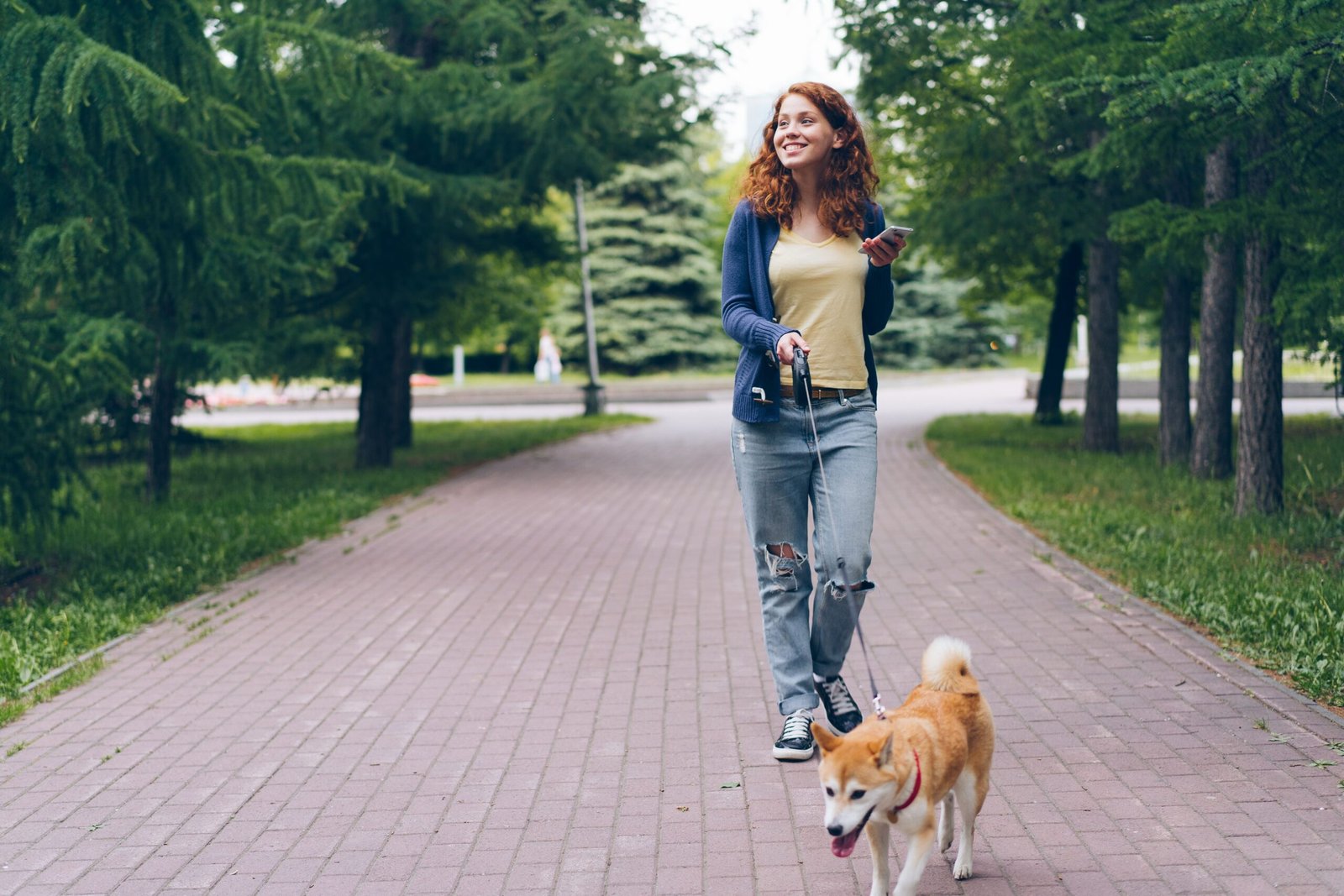
5. Sniffing walks. Same route, quarter of the speed. Release your dog to sniff and let it choose. Structured walking on the way out, released sniffing on the way back is a good compromise if you have a puller.
Build up to these
6. Find it. Hide treats around a room with your dog out, then release it with a cue. Progress to hiding one specific scented item. This is nose work at home and it is the closest thing to the study conditions.
7. Puzzle feeders and snuffle mats. Rotate them — a puzzle solved is a puzzle that has stopped working.
8. New tricks. Not more repetitions of sit. New behaviors: spin, chin rest, paw targeting, going around an object. Learning something novel is the mental load; performing something known is not.
9. Frozen stuffed toys. Wet food or soaked kibble, frozen solid, lasts many times longer than the same toy at room temperature.
For dogs that need a job
10. Name discrimination. Teach two toys by name, then ask for one. Genuinely difficult and highly absorbing.
11. Structured foraging. Scatter a full day’s food across a yard in stages. For working lines, this is closer to what the dog was built for than any walk.
Free tool
Dog Training Session Builder
New trick training is one of the best forms of mental work. Enter the cue and the minutes you have, and get a minute-by-minute script with rep counts and stop conditions.
Starting nose work at home, in four levels
Find-it is the highest-value activity in this article and it needs no equipment. The only way to get it wrong is to start too hard.
Level 1 — visible. With your dog watching, place three treats on the floor a few feet apart. Release with a cue such as “find it.” That is the whole exercise. Run it until it is dull, usually a day or two.
Level 2 — hidden in one room. Put the dog behind a door, hide five or six treats at floor level in easy places, then release. Resist helping. The dog working it out slowly is the point; a dog being pointed at treats is doing something else entirely.
Level 3 — height and difficulty. Hide on a chair seat, behind a table leg, under the edge of a rug. Use fewer, better treats. Sessions of five minutes are plenty.
Level 4 — a specific scent. Rub a cloth with something distinctive, hide the cloth rather than food, and pay from your hand when the dog finds it. This is the version closest to formal scent work, and it will absorb a working dog for as long as you keep raising the difficulty.
Two rules throughout: let the dog fail and keep searching rather than rescuing it, and end while it is still interested rather than when it gives up.
Which dogs need this most
Working lines. Border Collies, Malinois, working-line spaniels and gundogs were selected for stamina and problem-solving. Walking one further builds fitness; giving it a task uses the thing it was bred for. Our guide to high-energy breeds covers this in detail.
Adolescents. Between six and eighteen months, trainability drops and energy does not. Mental work is the release valve that does not require asking for obedience you are unlikely to get.
Senior dogs. Low impact on joints, works regardless of hearing loss, and a blind dog can do scent work almost as well as a sighted one. It is also one of the few things with a genuinely protective element for an aging brain. See senior dog behavior changes.
Dogs on restricted exercise. Post-surgery, injured, or a growing large-breed puppy where forced repetitive exercise is a joint concern. Mental work has no such limit.
Anxious dogs. The optimism finding matters most here. See the five types of dog anxiety.
Which activity for which dog
Enrichment is not one thing, and the right choice depends more on the dog in front of you than on what is trending.
| Situation | Best first choice | Daily time | Why it fits |
|---|---|---|---|
| Working line, restless in the evening | Nose work and shaping new tricks | 25–30 min | Uses independent problem-solving, low arousal afterwards |
| Adolescent, ignoring known cues | Scatter feeding and find-it | 20 min | No obedience required at a stage when it is unreliable anyway |
| Senior dog | Short find-it, snuffle mat | 10–15 min in pieces | No joint load, works with poor hearing or sight |
| On crate rest after surgery | Puzzle feeders, towel rolls, chin-rest training | 15 min | Zero movement required |
| Anxious dog | Sniffing walks on a long line | 20–30 min | Slow breathing and choice, both settling |
| Puppy under 5 months | Scatter feeding, one new trick | 5–10 min total | Short attention span; rest matters more than volume |
| Dog that guards food | Scatter feeding in an open space, alone | 10–15 min | Spreads the resource out instead of concentrating it |
Where enrichment is not the answer
This is the section most articles on this subject leave out, and it matters.
Separation-related distress. A frozen toy does not treat it. Dogs in genuine distress usually will not eat at all when alone, and a full toy on your return tells you more than an empty one. See separation anxiety.
Reactivity. Enrichment lowers baseline arousal, which helps. It does not change how your dog feels about other dogs. That needs threshold work.
Pain. A dog that has become restless or irritable may be uncomfortable rather than under-stimulated. Around a third of dogs referred for behavior work have a painful condition.
Under-sleeping. This one is counter-intuitive: a dog that cannot settle may be overtired, not under-worked. Adding enrichment to a chronically over-aroused dog makes it worse. Puppies especially need 16 to 18 hours of sleep and will not take it voluntarily.
The test: does your dog settle after a mental session, or ramp up further? Ramping up means arousal is the problem, not boredom.
Mistakes worth avoiding
- Making it too hard at the start. A dog that fails at a puzzle disengages and does not come back to it. Start easy enough to be boring.
- Using the same puzzle for months. Solved is solved. Rotate.
- Adding enrichment on top of a full diet. Use the daily food allowance, not extra. This is a common route to weight gain.
- Leaving destructible items unsupervised. Cardboard and towels are enrichment with you present, and an obstruction risk without you.
- Treating it as a replacement for walks. Dogs need to leave the house for reasons beyond exercise.
- Only doing it when the dog is already wound up. Then it becomes a reward for pestering. Schedule it.
A week that does not go stale
The commonest failure is not doing too little. It is doing the same thing until the dog stops caring, then concluding enrichment does not work.
- Monday: breakfast scattered outside; evening find-it, level two.
- Tuesday: puzzle feeder A; five minutes of a new trick.
- Wednesday: sniffing walk with the pace set by the dog; towel roll after dinner.
- Thursday: puzzle feeder B; three-cup game.
- Friday: find-it, level three; frozen stuffed toy in the evening.
- Saturday: a longer foraging session in the yard, food spread in stages.
- Sunday: light day. One scatter feed and rest.
Keep the puzzle feeders in two sets and swap them weekly. Rotation costs nothing and it is the difference between a toy that works for a month and one that works for years.
Sleep is the other half
Mental work and rest are not opposites — they are a pair. A study published in Scientific Reports taught dogs new commands in a foreign language and then measured their sleep. Sleep structure changed after learning, and dogs that slept after training performed better afterwards.
So the sequence that works is: short mental session, then genuine rest. Not enrichment all afternoon. A dog that is mentally worked and then allowed to sleep consolidates what it learned; a dog that is stimulated continuously just becomes chronically aroused.
A realistic daily pattern
- Morning: breakfast scattered or from a puzzle feeder instead of a bowl.
- Midday: five to ten minutes of a new trick, or a find-it game.
- Afternoon: one walk with a released sniffing section.
- Evening: frozen stuffed toy while you eat, then enforced quiet.
That is perhaps thirty minutes of your attention across a day, and it will do more for most dogs than doubling the walk.
Troubleshooting
The dog loses interest after thirty seconds. Too hard, or the food is not worth the effort. Drop a level and use something better than kibble for a week.
It gets frustrated and starts barking at the puzzle. Same cause. Frustration is information, not stubbornness. Make the next attempt easy enough that it succeeds in ten seconds.
It is more wound up after a session, not less. The activity is too exciting or too long. Swap fast games for slow sniffing, cut the time in half, and follow with enforced rest.
Two dogs compete over the games. Run them separately, in different rooms. Scatter feeding two dogs in one space is a reliable way to start an argument.
The dog eats the cardboard. Stop using destructible items with that dog and switch to snuffle mats and rubber puzzles. Swallowing is a different risk from shredding.
Nothing has changed after two weeks. Check the total picture before adding more: sleep, pain, and arousal all produce restlessness that no puzzle will touch.
When to see a vet
- Restlessness or irritability that appeared suddenly
- Pacing, circling or repetitive behaviors that persist
- A dog that cannot settle at all, even when clearly tired
- Sudden loss of interest in food games in a dog that enjoyed them
- Any behavior change in an older dog
Restlessness is a symptom, not a diagnosis. Pain, cognitive decline and several medical conditions all present this way, and none of them respond to a puzzle feeder.
Affiliate recommendation
Brain Training for Dogs
This is the one program we point people to that is built entirely around mental stimulation rather than obedience drilling. From Adrienne Farricelli, a CPDT-KA certified trainer, and force-free throughout — no dominance, no prong or shock collars.
One honest caveat: the sales page talks about eliminating problems quickly. Ignore that part. Real behavior change takes weeks to months, as every guide on this site says.
See the program · We earn a commission at no extra cost to you. See our affiliate disclosure.
Watch the training in action
PawMastery on YouTube — 149,000+ subscribers following along with real training sessions.
Frequently asked questions
How do I tire out my dog without walking?
Scatter feeding, find-it games, puzzle feeders, new trick training and frozen stuffed toys. Twenty minutes of nose work leaves most dogs more settled than a 45-minute walk.
Is mental stimulation really as tiring as exercise?
For most dogs, yes — and it does something exercise does not. Dogs doing nose work became measurably more optimistic on a cognitive bias test, while a heelwork group doing the same amount of activity did not.
How much mental stimulation does a dog need daily?
Twenty to thirty minutes across the day suits most pet dogs, delivered in short sessions rather than one block. Working lines need more; senior dogs need shorter sessions more often.
Why is my dog still hyper after a long walk?
Either you are building fitness rather than tiring your dog, or it is over-aroused rather than under-exercised. If your dog ramps up after activity instead of settling, add rest rather than more work.
Are puzzle feeders worth it?
Yes, with one caveat: rotate them. A puzzle your dog has solved is no longer a puzzle. A snuffle mat and a scatter of food in grass do much the same job for nothing.
Can enrichment fix separation anxiety?
No. Dogs in genuine distress usually will not eat when alone. A full toy on your return is a sign of distress, not of a failed toy.
Is sniffing on walks bad for training?
No. Structure it as a released section rather than banning it — that way sniffing becomes something you grant rather than something your dog pulls to reach.
What if my dog gives up on puzzles?
You started too hard. Make the next one easy enough to be boring, and build from there. A dog that fails at a puzzle stops trying and is difficult to bring back.
Will scatter feeding make my dog scavenge on walks?
It has not been shown to, and a dog that is regularly allowed to forage legitimately is often less frantic about it. Train leave it alongside, and use your own yard rather than public ground.
Can I use my dog’s whole daily food for this?
Yes, and it is the tidiest way to do it. Enrichment fed on top of full meals is a common route to weight gain, so measure it out of the daily allowance rather than adding to it.
Is a snuffle mat better than a puzzle feeder?
They do different jobs. A snuffle mat uses the nose and suits most dogs daily; a puzzle feeder is a problem to solve and works better rotated. Having one of each covers most of it.
How do I do this with a dog that is not food motivated?
Check first that it is not simply being fed too much elsewhere. Then try higher-value food, or use a toy as the hidden target instead of treats and pay with a game.
Does mental work help with barking or chewing?
It helps when boredom is the driver, which is often. It does nothing for barking driven by fear or for chewing driven by distress, so identify the cause before adding more enrichment.
Restlessness, pacing and sudden changes in activity level can have medical causes and warrant a veterinary appointment rather than more enrichment. Never leave a dog unsupervised with destructible items.
Sources
- Duranton & Horowitz, let me sniff! Nosework induces positive judgment bias in pet dogs, Applied Animal Behaviour Science
- Kis et al., the interrelated effect of sleep and learning in dogs, Scientific Reports
- Mills et al., pain and problem behavior in cats and dogs, Animals
- RSPCA: dog behavior guidance
- ASPCA: general dog care
- AVSAB Position Statements on Humane Dog Training