The standard advice for a high-energy dog is more exercise. It is also the reason so many owners of Border Collies and Huskies end up exhausted with a dog that is still restless.
You cannot out-walk a breed developed to work all day. What you can do is build a dog whose brain is occupied, whose instincts have somewhere legitimate to go, and who has learned how to switch off.
Short answer: stop trying to tire these dogs out physically. Stamina rises to meet whatever you ask of it, and high-arousal exercise rehearses excitement rather than releasing it. Give moderate physical activity, fifteen to thirty minutes a day of scent work and problem-solving, an outlet that matches the breed’s actual instinct, and enforced rest. Then train an off-switch as a behavior in its own right. That combination settles a working dog; another mile does not.
The exercise trap
Run a working dog for two hours a day and you get a fitter working dog. Its stamina rises to meet the demand, and next month two hours is no longer enough.
Worse, most of that exercise is high-arousal: running, chasing, fetching. You are not settling the dog, you are practicing excitement. A dog kept in that state for hours does not come home relaxed; it comes home wired and unable to rest.
A tired dog is not a trained dog. Physical exercise is necessary, and it is not the lever most owners think it is.
Two very different problems
Border Collies and Huskies get lumped together as high-energy, but they are difficult in opposite ways.
The Border Collie: a brain that will not idle
Bred to make complex decisions at a distance from the handler, with intense focus on movement. That produces a dog that is extraordinarily trainable and also extraordinarily prone to inventing its own jobs when you do not supply one.
The eye. The hard, locked-on stare at another dog, a bicycle, a jogger, or a car is herding genetics plus arousal. Owners often read it as aggression or as focus. It is the front end of a herding sequence, and left to run it becomes chasing and nipping.
Nipping at heels. Directed at running children, cyclists, and vacuum cleaners. Normal breed behavior in the wrong context, and it needs an outlet plus management, not punishment.
Sound and movement sensitivity. Many are startled by sudden noises and fixated on moving objects. This overlaps heavily with reactivity.
Compulsive behaviors. Shadow chasing, light chasing, tail spinning, and flank sucking develop in under-stimulated Collies and become very hard to extinguish once established. If your Collie has started chasing shadows or reflections, treat it as urgent rather than quirky: increase mental work immediately, reduce access to the trigger, and speak to a behaviorist if it is already entrenched.
The Husky: built to keep going, and not built to check in
Developed to pull loads over long distances in a team, making decisions independently. That produces a very different dog.
Recall is genuinely difficult. Huskies were selected to run forward, not to orient back to a handler. Combine that with a strong prey drive and you have a breed where many experienced owners never trust off-leash reliability in unfenced areas. That is not a training failure; it is honest risk assessment. Long-line work, and secure fenced areas for freedom.
Escaping. They climb, dig, and squeeze. Fences need height, dug-in bases, and regular inspection.
Vocalization. Howling and talking are breed-typical rather than problems to be trained away.
Heat. A double coat built for cold. Exercise early and late in warm weather, and take panting seriously.
Pulling. Selected for it, over generations. Loose-leash walking is achievable but takes longer than in most breeds, and opposition reflex is working against you. See stopping leash pulling.
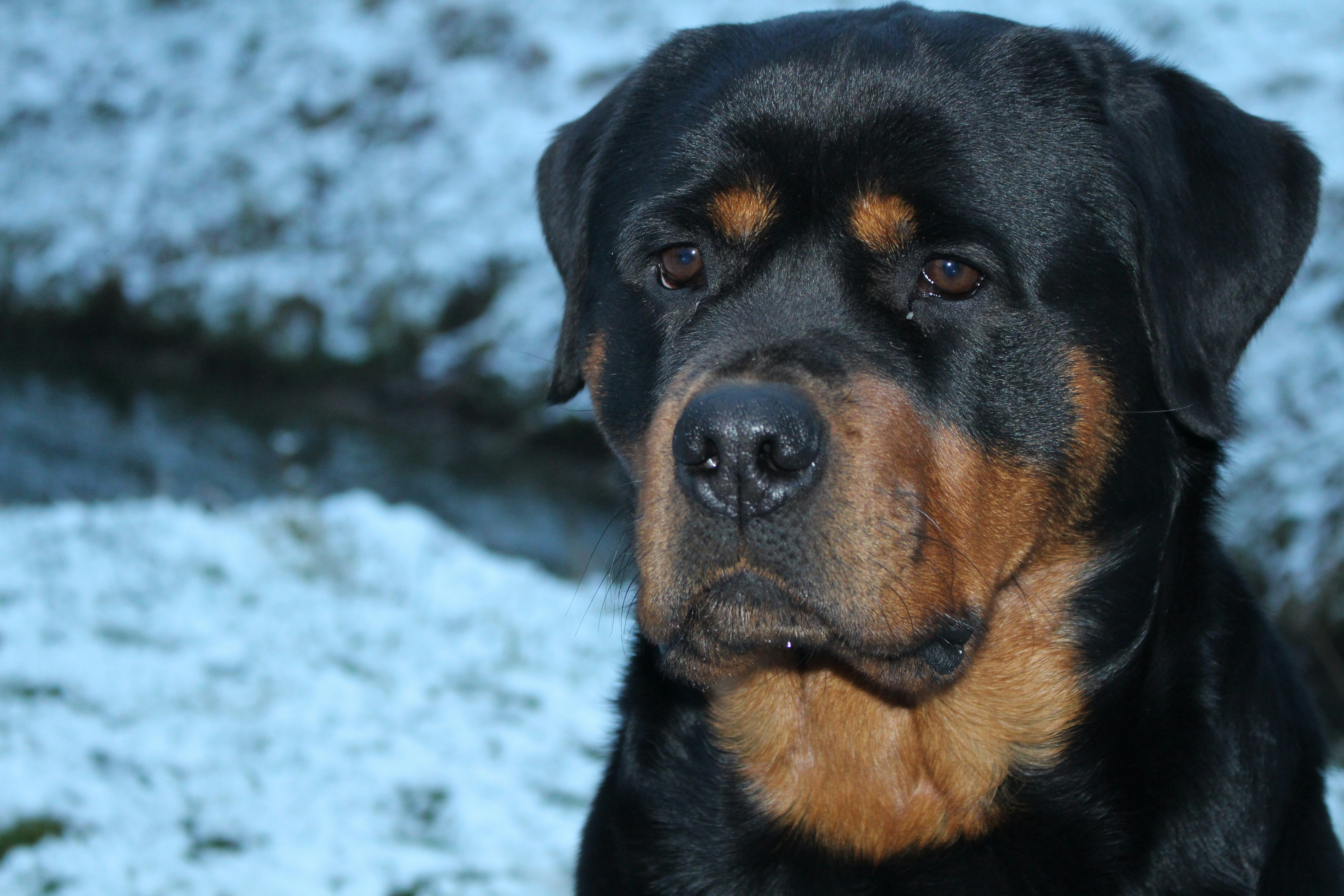
Breed matters here in a way it does not for most training questions. If you are weighing up a powerful working breed rather than a high-energy one, our honest guide to Rottweilers as family dogs applies the same test: match the dog to the household you actually have.
Under-stimulated working dogs often express it through destruction. See our guide to stopping destructive chewing.
The full case for this — eleven specific exercises and an exchange rate against walking — is in our guide to tiring out a dog without walking more.
Collie and Husky, side by side
Both are labeled high-energy and the label hides more than it explains. What each breed was selected to do predicts the problems you will meet.
| Border Collie | Siberian Husky | |
|---|---|---|
| Bred for | Independent decisions at a distance, controlling movement | Sustained pulling over long distances in a team |
| Orientation to the handler | Intense, constant | Low by design |
| Typical trouble | Fixation, chasing, compulsive patterns | Escaping, running, not returning |
| Off-leash outlook | Achievable with work | Many experienced owners never risk it in open ground |
| Best outlet | Herding-shaped games with rules, scent work, shaping | Canicross, bikejoring, harness pulling, long structured hikes |
| Noise | Barking at movement | Howling and talking, breed-typical |
| Weather | Copes broadly | Struggles in heat; exercise early and late |
| Worst-case household | Chaotic, unstructured, no training time | Unfenced yard, hot climate, expectation of off-leash freedom |
A Collie in the wrong home invents a job. A Husky in the wrong home leaves. Neither is a training failure so much as a mismatch between what the dog was built for and what it is being asked to do.
Mental work is the actual lever
There is measured evidence behind this, not just experience. Researchers split pet dogs into two groups for two weeks: one did nose work, searching for hidden food on their own initiative; the other did heelwork, handler-directed walking to heel. Same activity time, same handler attention.
Both were then tested on a cognitive bias task, a standard measure of optimism in animals. The nose work group became measurably more optimistic. The heelwork group did not.
The variable was not effort — it was who directed the activity. For a breed built to solve problems independently, that distinction is the whole point. A Collie given a job it can work out for itself is doing something a Collie walked further is not.
Fifteen minutes of sniffing or problem-solving does more for a working dog than an extra half-hour of walking. It is also lower arousal, so the dog can settle afterwards.
- Scent work. The highest value per minute. Hide treats around a room or yard and let the dog find them. Progress to hiding a specific scented item. Sniffing is measurably good for a dog’s emotional state.
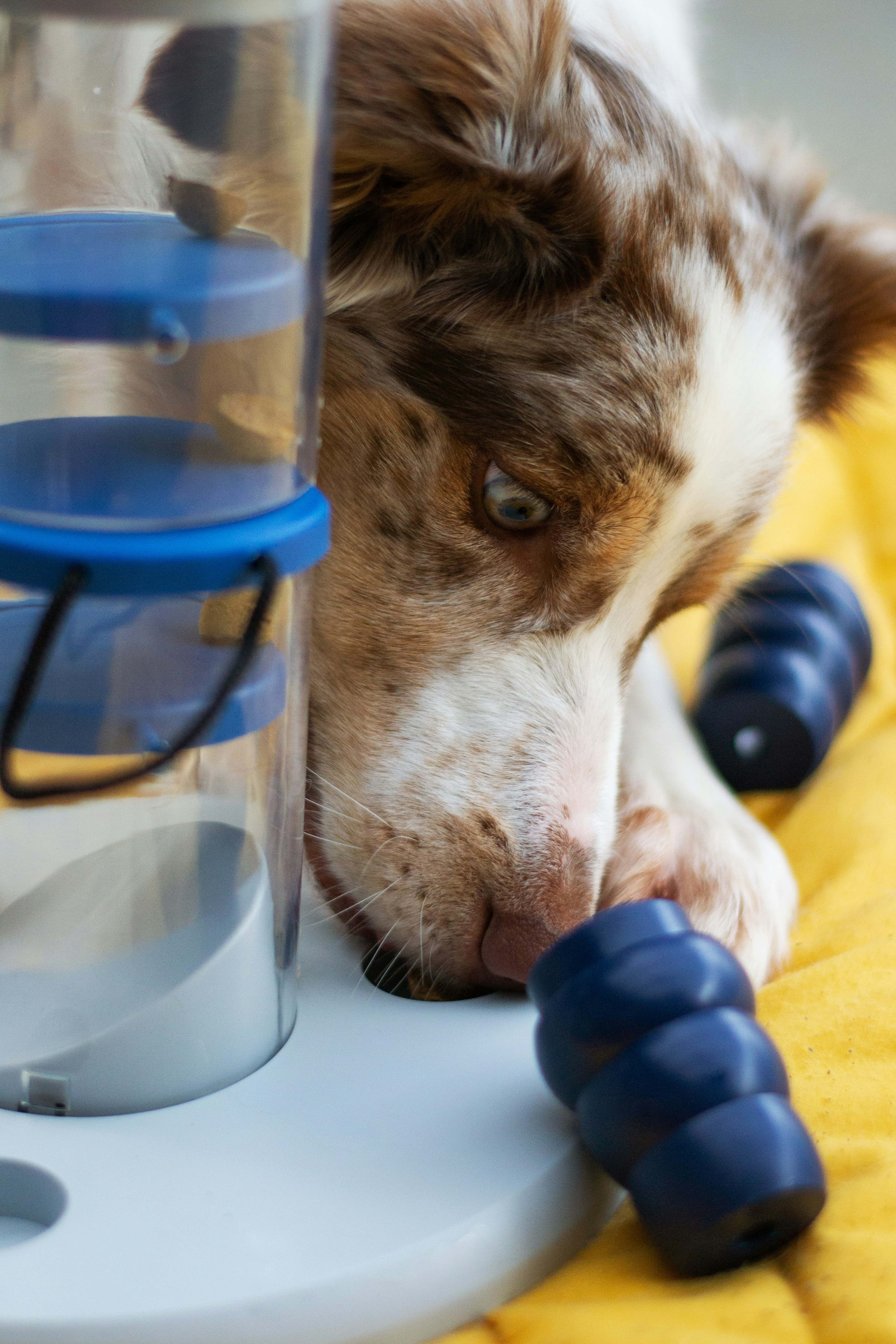
- Puzzle feeders, never a plain bowl. A working dog’s meal should cost it some effort. Rotate the feeders so they stay interesting.
- Shaping and trick training. Teaching a new behavior from scratch is far more tiring than repeating known cues.
- Scatter feeding. Throw the meal into grass and let the dog hunt for it. Ten minutes, no equipment.
- Structured walks with recall, position changes, and finding things, rather than distance covered.
Match the outlet to the instinct
Generic enrichment helps. Enrichment that matches what the breed was built to do helps far more.
Border Collie: the herding sequence is eye, stalk, chase, grip. Give it a legitimate version. A flirt pole with clear start and stop cues. A large herding ball. Treibball. Frisbee with rules. Agility. The structure matters as much as the activity: a Collie allowed to chase without an off-switch practices arousal.
Husky: the drive is sustained forward movement. Canicross, bikejoring, scootering, or pulling a weighted cart give it a legitimate outlet, and a Husky permitted to pull into a proper harness in the right context often becomes easier to teach not to pull on an ordinary walk.
Under-stimulated working dogs frequently express it vocally. Our guide to excessive barking covers the boredom type specifically.
Free tool
Dog Training Session Builder
These breeds need frequent short sessions, not long ones. Enter the cue and the minutes you have for a minute-by-minute script with rep counts and stop conditions.
What a workable day looks like
Owners burn out because the plan they read about takes three hours. A working dog does better on this, which takes about ninety minutes spread across the day.
- Morning, 20–30 minutes. A sniffing walk rather than a fast one. Let the dog set the pace and use its nose; this is exercise and enrichment at once.
- Breakfast from a puzzle or scattered in grass, 10 minutes. No bowl. The meal should cost the dog something.
- Mid-morning enforced rest, 1–2 hours. Crate, pen or a quiet room. Not optional for a dog that will not stop on its own.
- Midday training, 5 minutes. Something new rather than a review of known cues. Shaping is far more tiring than repetition.
- Afternoon breed-specific outlet, 15–20 minutes. Flirt pole with rules, herding ball, canicross, harness work.
- Evening scent game, 10 minutes, then a chew on the settle mat.
- Rest again. Aim for the dog to be asleep, not merely quiet, for most of the evening.
Notice how much of that is rest. An under-slept working dog looks exactly like an under-exercised one, and the two get confused constantly.
Teaching an off-switch
The skill most high-energy dogs are missing is not obedience. It is knowing how to stop.
Train settling deliberately, as a behavior with its own rewards:
- Put down a specific mat. Any time the dog lies on it calmly, quietly drop a treat between its paws
- Say nothing, ask for nothing, and do not make it exciting
- Build duration slowly, and use a release cue to end it
- Give a frozen stuffed chew on the mat as a way to settle after activity
Add clear on and off cues to every game. A Collie that hears go get it and then that will do learns the boundaries of arousal. A dog that is only ever revved up never learns where the edges are.
Sleep is part of this
High-energy dogs are frequently under-slept, because the household is interesting and they will not stop voluntarily. An under-slept working dog looks like a dog that needs more exercise and is actually a dog that needs enforced downtime.
If your dog is manic in the evening, try a crate or pen with the lights dimmed before you try another walk.
Puppies and adolescents of these breeds
The first eighteen months set most of the pattern, and both breeds are harder in adolescence than almost anything else you will handle.
Do not build stamina early. Long forced exercise in a growing dog is hard on joints and it raises the baseline you will have to meet for the next decade. Short, varied, low-arousal activity is better in every way.
Teach rest from week one. A puppy that learns to nap in a pen at nine weeks becomes an adult that can switch off. A puppy that is entertained every waking minute does not.
Expect recall to fall apart between eight and eighteen months, particularly in the Husky. Move to a long line for that period rather than testing your luck and letting the dog rehearse ignoring you.
Start the breed-specific outlet early and with rules. A Collie that learns a start cue and a stop cue for chasing games at six months is far easier at two years than one that has only ever been revved up.
Common mistakes
- Endless fetch. High arousal, repetitive, hard on joints, and it builds an obsession rather than releasing energy.
- Answering restlessness with more exercise. Usually the wrong lever, and it raises the baseline requirement.
- Punishing herding behavior. The instinct does not disappear. Redirect it instead.
- Letting a Husky off-leash to test the recall. Test on a long line. The failed version of this test can be fatal.
- Long training sessions. These breeds learn fast; five focused minutes beats thirty.
- Ignoring early compulsive behavior in a Collie because it looks like play.
- Assuming intelligence means easy. A clever dog learns your mistakes just as quickly as your intentions.
Troubleshooting
The dog is exercised for two hours and still pacing. Classic sign that arousal, not energy, is the problem. Cut the high-speed exercise in half for two weeks, add scent work and enforced rest, and judge the change then.
It fixates on bikes, cars or joggers. Manage the distance so the dog can see them without locking on, pay heavily for looking away, and give the chase instinct a legitimate outlet elsewhere the same day.
It nips at running children. Herding behavior in the wrong context. Separate the dog from running games entirely for now, teach children not to run past the dog, and build an outlet with a flirt pole.
The Husky digs under or climbs the fence. Treat this as a containment engineering problem, not a training one: dug-in base, height, no climbable objects near the line, and daily checks.
It cannot settle even when tired. Train the mat as a specific behavior, pay for stillness rather than for lying down, and give a long-lasting chew there after activity.
Shadow or light chasing has appeared. Act now rather than later. Remove access to the trigger, raise mental work sharply, and get professional help early. Established compulsive patterns are far harder to change than new ones.
Are these dogs right for you?
Worth answering honestly before you commit.
A Border Collie suits someone who enjoys training as a hobby, has a structured routine, and wants a dog involved in daily activity. It suits a chaotic household with young children and no time considerably less well.
A Husky suits someone with secure fencing, a cool climate, an interest in a running or pulling sport, and no expectation of off-leash freedom in open country.
Neither is a good first dog for most people, and neither does well as a dog that is walked twice and left alone all day.
The dogs that end up in rescue are rarely badly behaved. They are usually working dogs in homes that had nothing for them to do.
Which other breeds this applies to
The principle is not about these two dogs. It is about what a breed was selected to do, and it transfers.
- Australian Shepherds and Kelpies read almost exactly like the Collie section: movement sensitivity, an eye, and a brain that invents work.
- Belgian Malinois and working-line German Shepherds need the same structure with a higher bite-work and impulse-control component, and they are not first dogs.
- Terriers were bred to work independently against prey. The outlet is digging boxes, flirt poles and scent games rather than distance.
- Spaniels and pointers want their noses employed; scent work is close to a complete answer for them.
- Alaskan Malamutes and other northern breeds follow the Husky pattern on containment, heat and recall.
The test is the same in every case: name what the breed was built to do, then decide where that goes in your week. A drive with no legitimate outlet does not disappear.
Affiliate recommendation
Brain Training for Dogs
If you want a structured program to work through, this is the one we point people to. It was built by Adrienne Farricelli, a CPDT-KA certified trainer, and it is force-free throughout — no dominance, no prong or shock collars. The focus is mental stimulation and impulse control, which is the foundation most training problems come back to.
One honest caveat: the sales page talks about eliminating problems quickly. Ignore that part. Real behavior change takes weeks to months, as every guide on this site says.
See the program · We earn a commission at no extra cost to you. See our affiliate disclosure.
Watch the training in action
PawMastery on YouTube — 149,000+ subscribers following along with real training sessions.
Frequently asked questions
How much exercise does a Border Collie need?
Substantial daily physical exercise, but mental work matters more. Adding walks to an already exercised Collie tends to produce a fitter dog that is still restless.
Can a Husky ever be trusted off-leash?
Many experienced owners never trust it in unfenced areas. The breed was selected to run forward independently, and prey drive compounds it. Use a long line and secure fenced spaces.
Why does my Border Collie stare at bikes and joggers?
That locked-on stare is the eye, the first stage of the herding sequence, combined with arousal. Redirect it into an appropriate outlet and manage the environment rather than punishing it.
My Collie chases shadows. Is that a problem?
Yes, and it is worth acting on quickly. Shadow and light chasing are compulsive behaviors that develop in under-stimulated Collies and become difficult to extinguish once established. Increase mental enrichment and consult a behaviorist if it is already frequent.
Are these breeds good with children?
They can be, with supervision. Collies may nip at running children as part of the herding sequence, which needs managing rather than punishing. Both breeds need a child-free space to rest in.
How do I tire out a high-energy dog?
You do not, reliably, through exercise alone. Combine moderate physical activity with scent work, puzzle feeding, and training, then enforce rest. Mental work is more tiring per minute than walking.
Is fetch bad for these breeds?
Not in moderation with clear start and stop cues. Repetitive, unlimited fetch builds arousal and obsession and is hard on joints. Vary the activities.
Is a treadmill a reasonable substitute for walks?
It builds fitness and does nothing for the brain, which is the part that needs occupying. Use it for weather emergencies, not as the main plan.
How much rest should a working dog actually get?
Most adult dogs need a large share of the day asleep, and high-energy dogs frequently get far less because the household is interesting. If yours is manic in the evening, try enforced downtime before another walk.
Will neutering calm a high-energy dog down?
No. Drive and energy level are not the same thing as sex hormones, and neutering is not a behavior plan. Discuss the timing and the decision with your vet on its own merits.
Can these breeds live in an apartment?
Yes, if the daily structure is there. Square footage matters far less than whether the dog gets an outlet, training and enforced rest. A yard is not enrichment.
Is agility a good outlet?
It suits Collie-type dogs well, provided the training includes an off-switch. Any fast, exciting activity trained without clear start and stop cues raises baseline arousal rather than lowering it.
Sudden changes in energy, restlessness, or the onset of repetitive behaviors can have medical causes and are worth raising with your vet. Established compulsive behaviors need a veterinary behaviorist rather than more exercise.
Sources
- Duranton & Horowitz, nosework induces positive judgment bias in pet dogs, Applied Animal Behaviour Science
- Kis et al., the interrelated effect of sleep and learning in dogs, Scientific Reports
- Asher et al., adolescent-phase behavior and reduced trainability in dogs
- Mills et al., pain and problem behavior in cats and dogs, Animals
- RSPCA: dog behavior guidance
- ASPCA: general dog care
- AVSAB Position Statements on Humane Dog Training