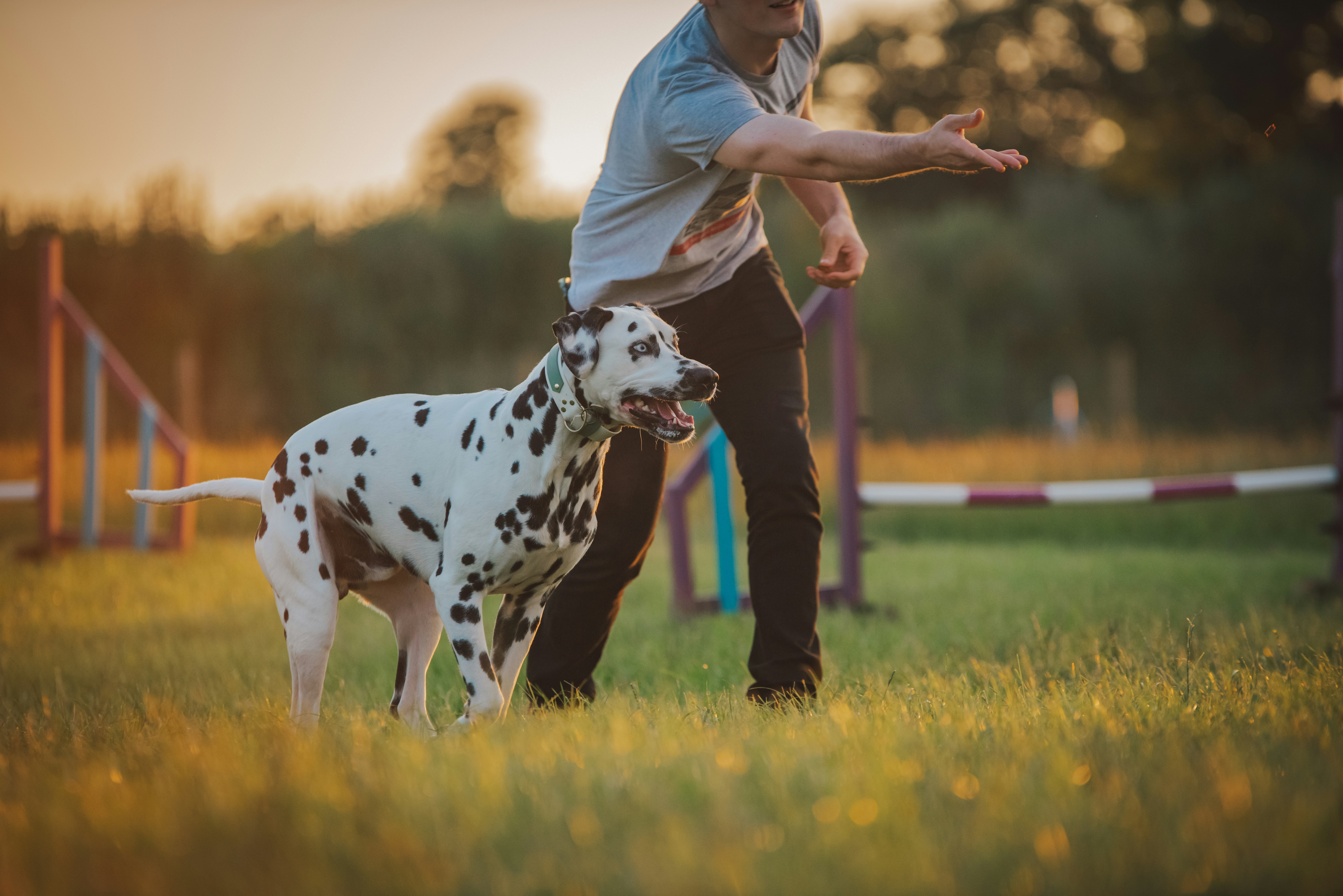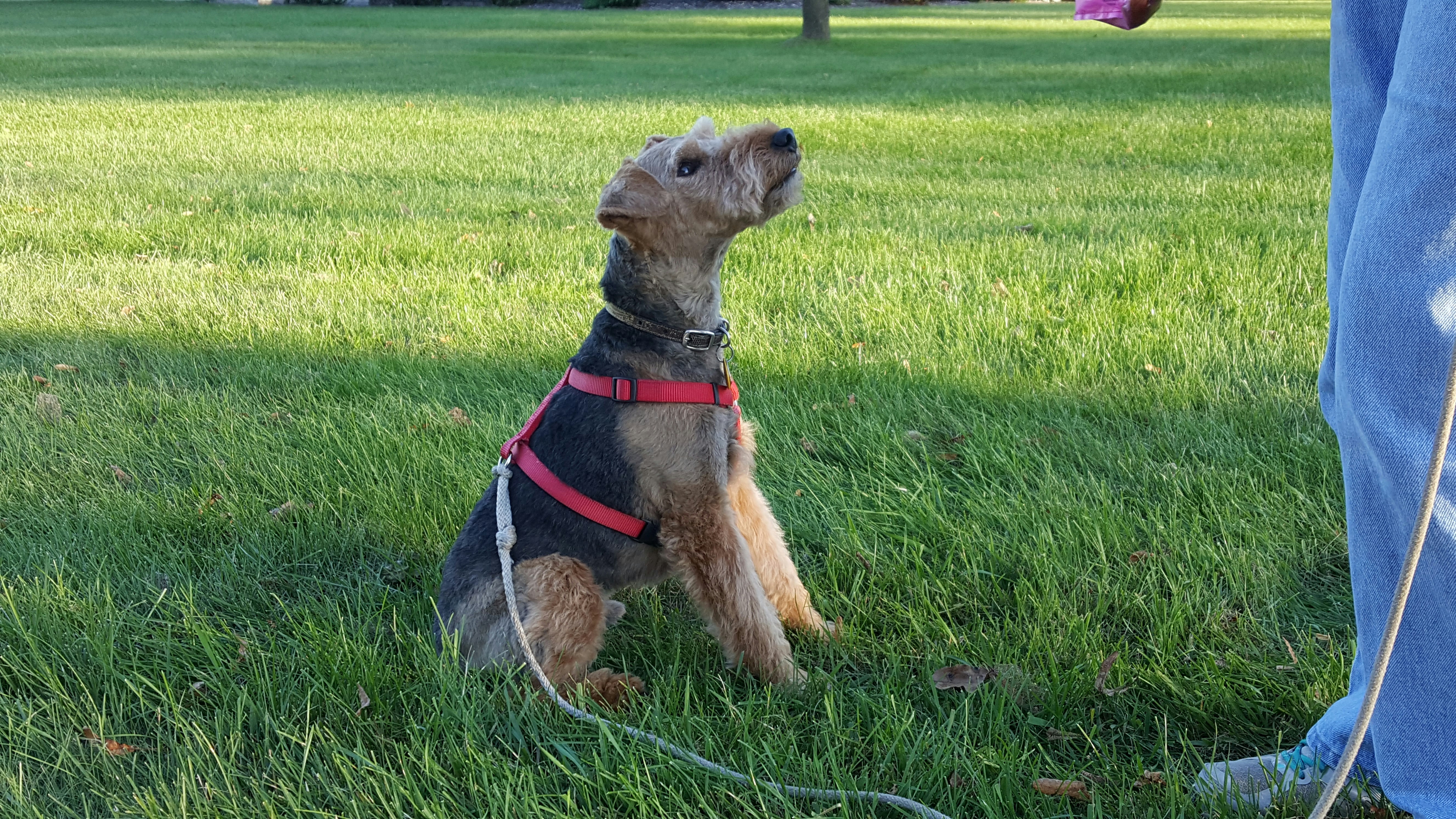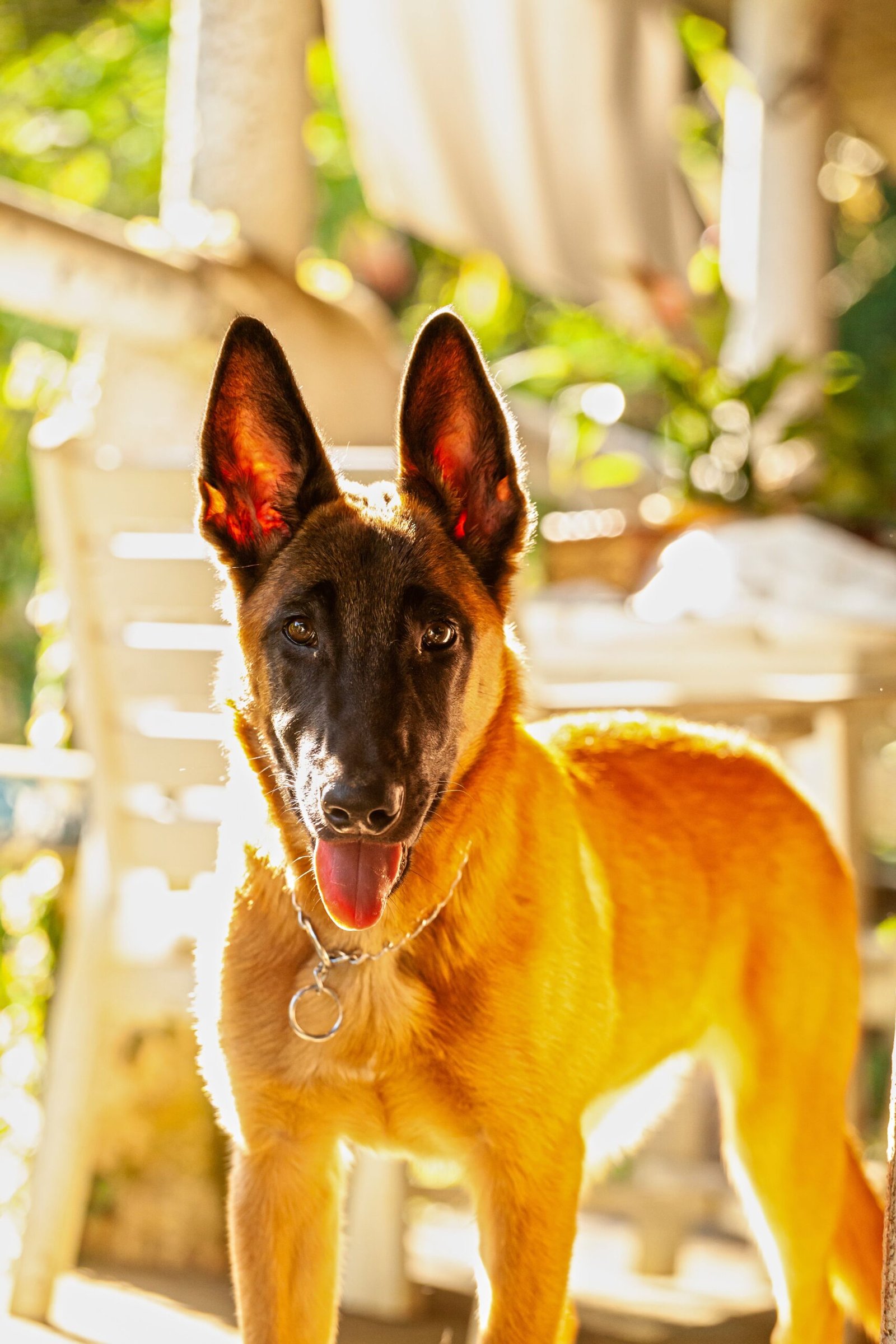
A thirty-second clip of a Belgian Malinois running through commands went out on our channel a few months ago. It did what short videos do — it traveled.
What was more interesting than the views was the comment section. Thousands of people argued underneath it, and buried in the jokes were the same five misunderstandings we see in every training conversation.
So this article is built out of them. Every quote below is a real comment, with its real like count, and each one opens a question worth answering properly.
The clip this article is about
Thirty seconds, one Belgian Malinois, and several thousand people arguing underneath it.

Short answer: the dog in the clip is not unusually intelligent and it did not learn forty cues in a training camp. It learned them in two to five minute sessions, several times a day, across years, with a high rate of payment and sessions that ended while it still wanted more. The visible part is the finished behavior. The part that takes the time is proofing, and it looks like nothing is happening, which is why nobody films it.
“This dog understands English better than my coworkers”
“This dog understand English better than my coworkers.”
The most-liked comment on the video, and it contains the most common misconception in dog training: that dogs understand words the way we do.
They do not, and the reality is more impressive.
A dog is not parsing English. It is learning that a specific sound pattern predicts that a specific behavior will pay. The word is a label attached to an action through repetition — which is why the same dog will respond perfectly to a cue in one room and blankly in another. It never learned “down”. It learned down, in the kitchen, from you, standing up, with food visible.
The reason a dog like this looks like it speaks English is that every one of those variables has been trained separately. That is not language comprehension. It is thousands of repetitions across changing conditions, which is considerably harder.
“We see training, but in actuality, the dog sees it as playtime”
“We see training, but in actuality, the dog sees it as playtime”
This one is not a misconception. It is the single most accurate observation in the entire comment section, and it is the answer to why some dogs work like this and others do not.
If training feels like work to the dog, you get compliance. If it feels like a game, you get a dog that offers behavior before you ask.
The difference is mechanical rather than mystical:
- Sessions end while the dog still wants more. Always. Ending on a win is what makes a dog keen to start next time.
- The rate of reinforcement is high. Something good happens every few seconds, not every few minutes.
- Failure costs nothing. Get it wrong, nothing happens, try again easier.
- It is short. Two to five minutes, several times a day.
A dog that has been drilled for twenty minutes is compliant. A dog that has done ten two-minute games is enthusiastic. From the outside they look similar for about a week, and then they diverge completely.
“The ‘WRONG!’ genuinely scared me more than the dog got scared”
“The “WRONG!” genuinely scared me more than the dog got scared”
Several people picked up on the same moment, and it is worth being precise here, because it is the part of the video most open to being read the wrong way.
A no-reward marker — a flat word that means that did not earn anything, try again — is not a punishment. It carries information, not threat. Delivered flatly, it tells the dog the last attempt did not pay and the next one might.
But the commenter’s instinct is worth taking seriously. Tone does the work here, and a marker delivered sharply stops being information and becomes intimidation. If your dog ducks, slows, or stops offering behaviors after you use it, it has become a correction regardless of what you intended it to be.
The test is simple: after the word, does your dog try again more eagerly, or less? More means it is working. Less means stop using it.
And for most pet owners, you do not need one at all. Saying nothing works just as well. Silence means no payment, and the dog draws the same conclusion without any risk of the tone slipping.
This matters because the evidence on the wider category is clear. In a survey of 140 owners of dogs with behavior problems, confrontational techniques produced aggressive responses at high rates — 43% for hitting or kicking, 31% for alpha rolls — while non-confrontational methods produced them in 0–6% of cases. The line between information and intimidation is one worth staying well clear of.
“Just give him his treat”
“Just give him his treat”
“Bro doesn’t need a treat. Give him a whole feast,” added @gatorjade, to 14,000 likes. “He deserves ALL of the treats,” said another, to 16,000.
It is a joke, and underneath it is a real principle most owners get wrong in the opposite direction.
Reward value has to match difficulty. Dry kibble is fine for a sit in your kitchen. It does not compete with a squirrel, another dog, or an open field. When people say their dog “knows it but ignores me outside”, the dog is usually doing exactly what it should: comparing your offer with the environment’s, and choosing the better one.
Three things about payment that owners routinely miss:
- Several small pieces in sequence beat one large one. Five deliveries feel five times better than one.
- Pay the hard repetitions every single time, forever. A recall away from another dog never goes on an intermittent schedule.
- Food is not the only currency. For a dog like this, the toy or the next command is often worth more than anything edible.
Free tool
Dog Training Session Builder
Short and cheerful is the whole method. Enter the cue and the minutes you have, and get a minute-by-minute script with rep counts and the condition that tells you to stop.
“I was a K-9 officer and a dog trainer in Chicago for years”
“I was a K-9 officer and a dog trainer in Chicago for years. The amount of training, the sheer number of hours necessary to get a dog trained this well is astounding…”
“The amount of training, the sheer number of hours necessary to get a dog trained this well is astounding,” he wrote.
This is the comment we would pin above every other one, because it is the thing the format hides.
A thirty-second clip shows the finished behavior. It cannot show the months underneath it, and that is precisely why short videos leave owners feeling like failures. You are comparing your week three to somebody else’s year two.
Realistic figures, for context:
- Sit or down, reliable indoors: one to three weeks
- A stay held at distance: three to eight weeks
- Recall in a genuinely distracting environment: eight to twenty-four weeks
- A repertoire like the one in the video: years, not months
And it is not continuous work. It is five minutes, twice a day, for a very long time. The dog in that clip did not learn forty things in a training camp. It learned them a few minutes at a time across years, which is far less impressive per session and far more impressive in total.
“This dog understands around 40 orders”
“This dog understands around 40 orders. It’s more than some workers in the shop.”
People fixate on the number, and the number is the least interesting part.
Forty cues is not forty times harder than one cue. Once a dog understands the game — that a sound means an action which produces payment — each additional cue gets faster to teach. The first three take weeks. The thirtieth takes days.
What actually takes the time is proofing: the same cue holding up with distraction, at distance, and after duration. One cue proofed properly is worth twenty taught only in a kitchen, and it is the part nobody films because it looks like nothing is happening.
“It’s all cool until a robber breaks in and tells the dog to be friendly”
“It’s all cool until a robber breaks in and tells the dog to be friendly”
A joke, and it accidentally raises something real.
Cues are attached to context, and much of that context is you. Your voice, your body position, your timing, the way you hold your hand. A stranger using the same word rarely gets the same response, which is why dogs frequently work beautifully for their owner and blankly for everyone else.
That is also why an adolescent dog that ignores you but listens to a visitor is not being disobedient. Research on adolescence in dogs found reduced trainability around the onset of puberty, directed specifically at the caregiver rather than at strangers. It genuinely is personal — and it genuinely is temporary.
What the clip shows, and what it took
Every line in the comment section maps onto a gap between what thirty seconds can display and what produced it.
| What it looks like | What is actually happening | What it cost |
|---|---|---|
| The dog understands English | Sound patterns attached to actions, one context at a time | Thousands of repetitions across changing conditions |
| Instant responses | Cues proofed against distance, duration and distraction separately | Months per cue at the reliability stage |
| Forty commands | The dog learned the game; later cues came faster than early ones | The first three are the expensive ones |
| Effortless focus | A high rate of reinforcement and sessions ended early | Discipline from the handler, not the dog |
| A naturally brilliant dog | A driven breed plus consistent short sessions | Years of five-minute blocks |
| One take | The successful take, kept | The failed reps are not part of the format |
None of that makes the training less impressive. It makes it reproducible, which is the more useful quality.
Why short video distorts what training looks like
This is not a complaint about the platform. It is a description of what the format can and cannot carry, and it is worth understanding before you measure your own dog against it.
- You see the take that worked. Every trainer films several attempts. The ones where the dog wandered off do not travel.
- Selection runs on outliers. Clips spread because they are unusual. The feed is a highlight reel of the top fraction of a percent, presented as though it were normal.
- The boring stage is unfilmable. Proofing is the same cue, slightly harder, forty times. There is no thirty-second version of it.
- Breed does a lot of quiet work. A driven working breed offers behavior constantly. The same session with a placid family dog looks slower and is not worse training.
- Nobody posts the setbacks. Adolescent regression, a bad week, an injury, a cue that fell apart. All normal, none of it in anyone’s feed.
The practical consequence is that owners quit at the exact point where the work starts paying. If you are three weeks in and comparing yourself to a two-year result, you will conclude something is wrong with your dog. Nothing is.
What the comment section got right
Reading several thousand comments back, the crowd was right more often than not.
They were right that the dog experiences it as play. Right that the reward matters. Right that the hours behind it are enormous. Right, in their instinct about tone, that how something is said matters as much as what is said.
Where they were wrong was the same place most owners go wrong: assuming this is about intelligence. It is not. The dog in that video is not unusually clever. It has been trained in short, frequent, cheerful sessions, for a very long time, by someone who kept it fun.
That is available to almost every dog and almost every owner. It just does not compress into thirty seconds.
Applying this to your own dog this week
Everything the comment section got right compresses into a routine you can start today.
- Two sessions a day, three minutes each. Set a timer and stop when it goes off, even mid-success. Especially mid-success.
- One cue per session. Not a review of everything the dog knows.
- Pay every few seconds at first. A high rate of reinforcement is what makes it feel like a game rather than a test.
- Match the payment to the difficulty. Kibble in the kitchen, something extraordinary for a recall away from another dog, every single time, permanently.
- Say the cue once. If you repeat it, the level is too hard, not the dog too slow.
- Change one variable at a time when you make it harder, and lower the others when you do.
- End cheerful. The last repetition of a session should be an easy one the dog gets right.
Six weeks of that produces a visible difference in almost any dog. It also produces no watchable footage whatsoever, which is rather the point.
Watch the training in action
PawMastery on YouTube — 149,000+ subscribers following along with real training sessions since 2019.
The traps owners fall into after watching a clip like this
Training for twenty minutes because the dog seemed to be enjoying it. The dog was. The next session will be worse. Long sessions are where enthusiasm goes to die.
Adding cues before proofing the ones you have. Ten cues that work only in the kitchen are worth less than two that hold up on a sidewalk.
Copying a correction you saw without the context around it. Tone, timing and the relationship underneath decide whether a word is information or intimidation, and none of those survive being copied from a video.
Buying the equipment instead of doing the reps. No collar, harness or gadget substitutes for short daily sessions.
Concluding your dog is stupid. Almost always the criteria are too high or the payment is too low. Both are yours to change.
Expecting a puppy to look like an adult working dog. Attention span is developmental. A twelve-week-old giving you ninety seconds is doing well.
Frequently asked questions
How many commands can a dog learn?
There is no fixed ceiling, and the number matters less than proofing. Once a dog understands that a sound predicts an action which produces payment, additional cues become progressively faster to teach.
Do dogs actually understand words?
Not as language. A dog learns that a sound pattern predicts that a specific behavior will be rewarded, in a specific context. That is why cues often fail in a new room until they are deliberately generalized.
Is saying “wrong” to a dog bad?
A flat no-reward marker carries information rather than threat. Tone decides which it becomes. If your dog offers fewer behaviors after hearing it, stop using it — and most owners do not need one, because saying nothing works just as well.
Why does my dog obey at home but not outside?
Because the cue was never proofed against competition, and because your reward stopped competing with the environment. Both are fixable, and neither is disobedience.
How long does training like this take?
Years, in short sessions. Basic cues take weeks; reliability under distraction takes months; a full repertoire takes far longer than any video suggests.
Are Belgian Malinois easier to train?
They are highly driven and were selected for working with a handler, which helps. They are also demanding, intense, and a poor fit for most homes. Drive is not the same as easy.
Should I train the way a working-dog handler does?
The mechanics transfer: short sessions, high payment, one variable at a time. The intensity does not need to. A pet dog with six solid cues and a good settle has everything most households actually need.
Is my dog too old to learn a long list of cues?
No. Adult and senior dogs often concentrate better than puppies do. Keep sessions shorter and be mindful of what the body can comfortably do.
Why does my dog perform for me and ignore my partner?
Because you are part of the cue: your voice, your posture, your timing. Have each person run the cue from the beginning; it goes much faster the second time.
How many cues does a pet dog really need?
A recall, a settle, leave it, a release word, loose-leash walking and one position cue will cover almost everything. Everything beyond that is enjoyable rather than necessary.
Do I need a clicker to train like this?
No. A consistent marker word does the same job. What matters is that it always means the same thing and is always followed by payment.
Videos show finished behavior, not the months behind it. If your dog is struggling with something specific — aggression, fear, or a sudden change in behavior — that needs a veterinarian or a qualified behaviorist rather than a clip.
Sources
- Herron et al., confrontational and non-confrontational training methods, Applied Animal Behaviour Science
- Asher et al., adolescent-phase behavior and reduced trainability in dogs
- China, Mills & Cooper, first-command responsiveness by training method, Frontiers
- Kis et al., the interrelated effect of sleep and learning in dogs, Scientific Reports
- AVSAB Position Statements on Humane Dog Training
Comments are quoted as published on YouTube, with like counts as displayed at the time of writing.