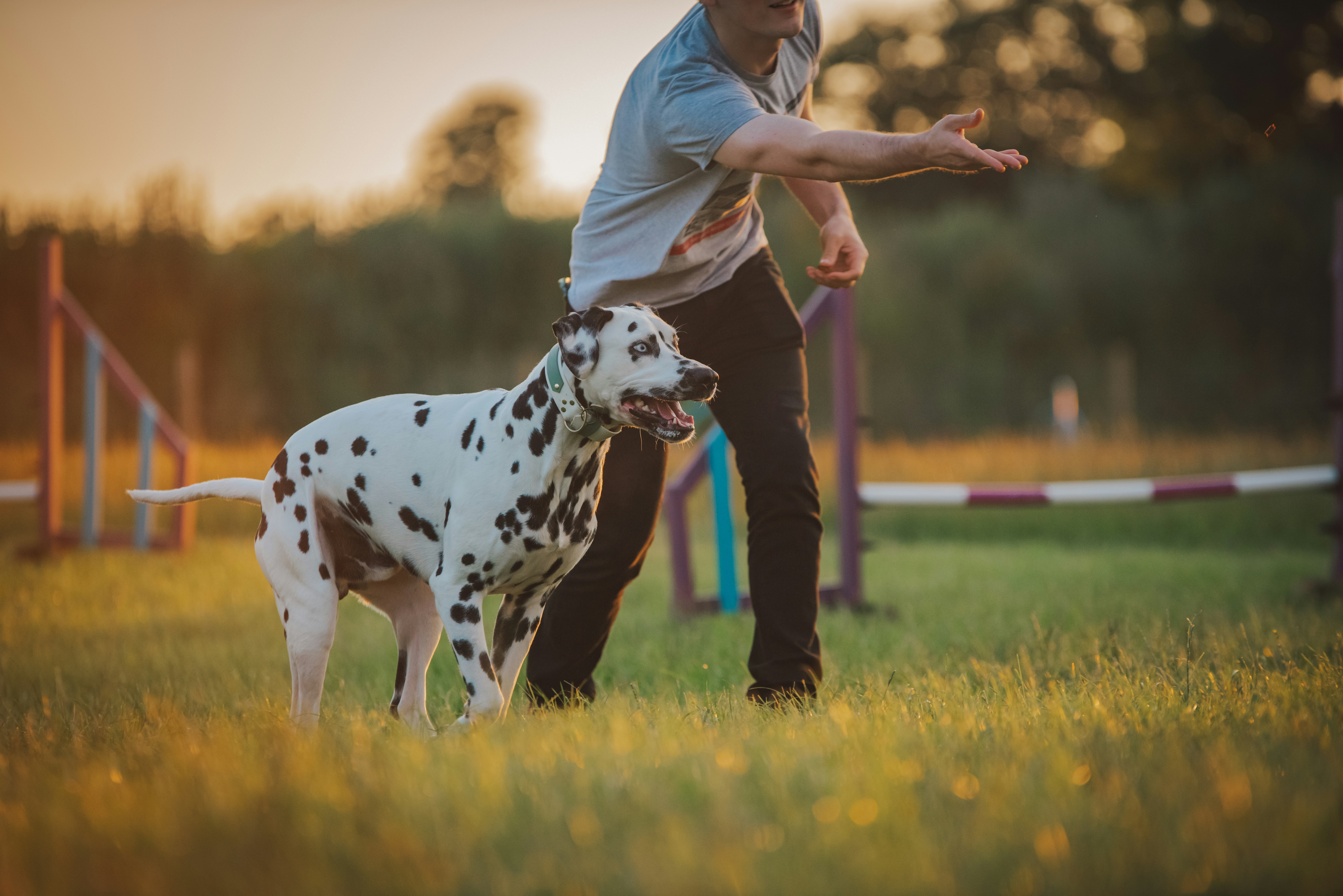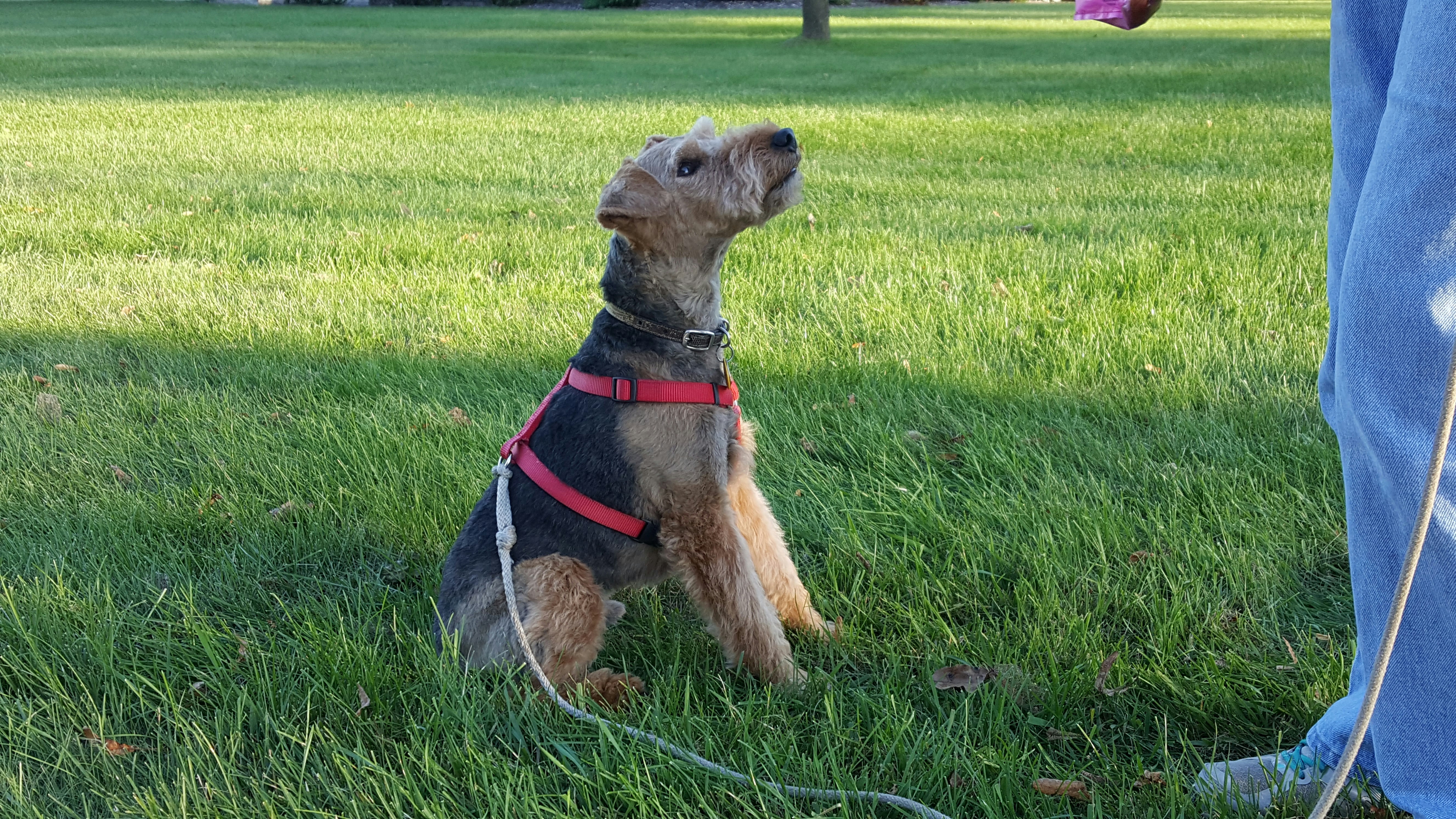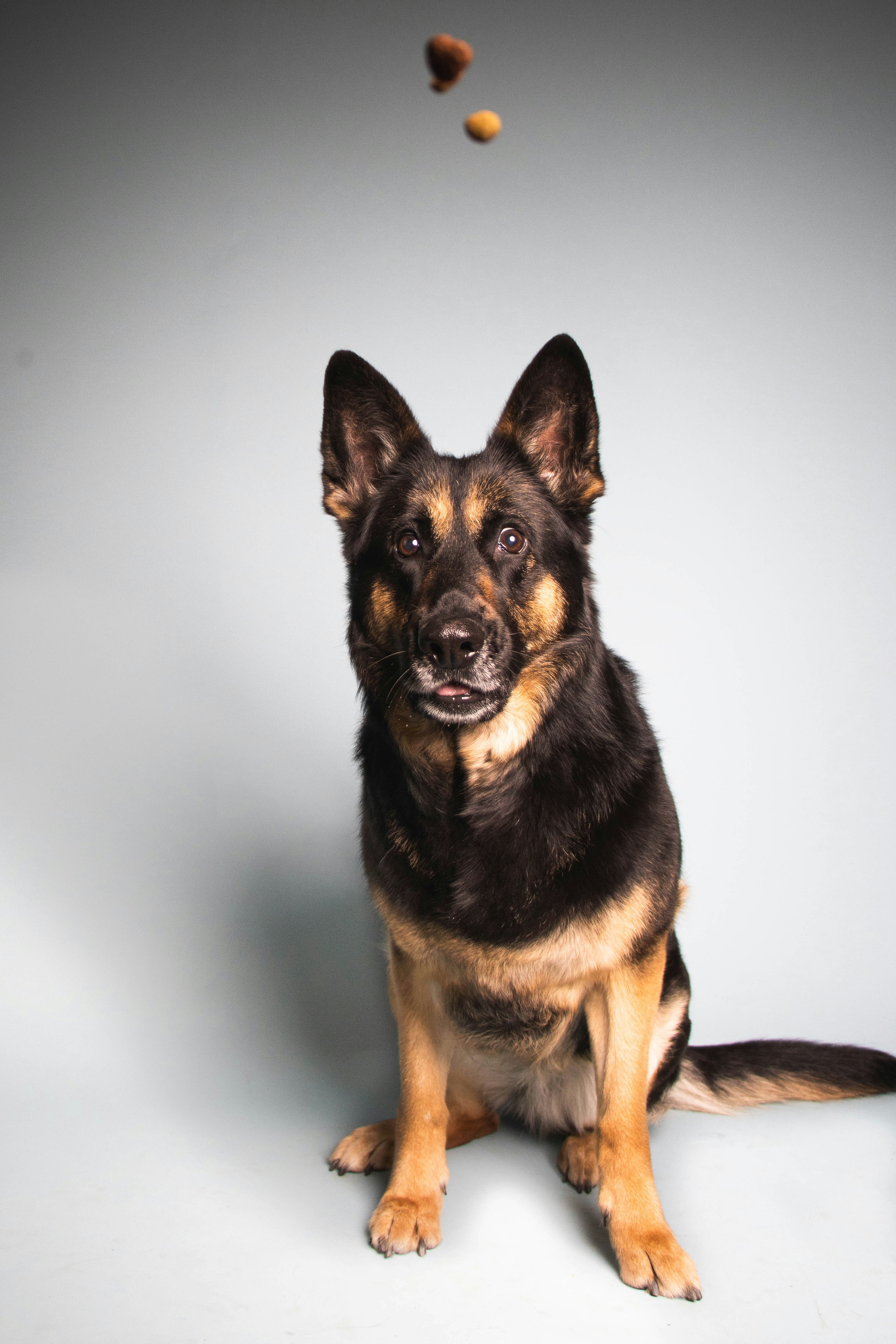
A dog that ignores you is not being disrespectful. It is telling you one of four things: the cue was never properly taught, the word got attached to nothing, the reward history is too thin to compete with the environment, or the behavior only ever worked in your kitchen.
All four are fixable, and none of them require force. This guide covers the mechanics that make training work, how to teach the core cues so they hold up outside, and a realistic timeline.
Why your dog does not listen
Work out which of these applies before you train anything else, because the fix is different in each case.
1. The cue was never actually taught. Most owners say the word while luring the dog into position. The dog learns to follow the hand, not the word. Test it: stand still, hands empty at your sides, and say sit once in a quiet room. If nothing happens, the word means nothing yet.
2. The cue is worn out. Say come fifteen times while the dog sniffs a hedge and the word stops predicting anything. Trainers call this a poisoned cue. A word the dog has learned to ignore is worse than no word at all, because you now have to rebuild it, often more easily with a completely new word.
3. The reward history is too thin. Your dog is not choosing between obeying and disobeying. It is choosing between what you are offering and what the environment is offering. If come has paid a piece of kibble twenty times and the field contains a rabbit, the rabbit wins. That is not defiance. It is arithmetic.
4. It was never generalized. Dogs are poor generalizers. A dog that sits perfectly in the kitchen may genuinely not know what sit means in the park, standing on grass, with a person nearby. Same word, different picture, unlearned behavior.
Notice that respect is not on the list. The framing matters, because owners who believe their dog is challenging them tend to escalate, and the research on that is not encouraging.
The four mechanics that make training work
Get these right and the individual cues become easy. Skip them and no amount of repetition helps.
1. Mark the exact moment
Dogs connect a reward with whatever they were doing in the second or so before it arrives. If your dog sits, then stands, then gets a treat, you have paid the standing.
Use a marker: a clicker, or a short word like yes. The sequence is always the same, being behavior, then marker, then reward. The marker buys you a few seconds to get the food out, because it tells the dog precisely which moment earned it.
Charge the marker first. Say yes, give a treat. Repeat twenty times over a couple of days, doing nothing else. Once the dog looks to you expectantly when it hears the word, it is ready to use.
2. Lure, then get rid of the lure fast
Luring, meaning moving food to move the dog, is the quickest way to get a behavior the first time. It is also where most training gets stuck permanently, producing dogs that only work when food is visible.
Fade it in three steps:
- Reps 1 to 5: food in your hand, lure the movement, mark, reward.
- Reps 6 to 10: same hand motion, no food in the hand. Mark when the dog does it, then reward from your other hand or a pouch.
- Reps 11 onwards: shrink the hand motion a little each time until it is a small gesture, or drop it entirely.
If you are still holding food in front of your dog’s nose after the first week, this is the step you skipped.
3. Add the word after the behavior, not before
This is the single most common error in obedience training.
The dog cannot learn what sit means while it is busy following your hand. Teach the movement first with the lure. Once the dog is offering it reliably to your hand signal, then start saying sit just before the signal.
The order is word, then signal, then behavior, then marker, then reward. After enough repetitions, the dog anticipates and sits on the word alone.
Say it once. If nothing happens, the dog is not ready at this difficulty level. Do not repeat the word, because that is how you get a cue the dog learns to ignore the first four times.
4. Teach a release cue
Nearly every my-dog-will-not-stay problem is actually a missing release cue.
If the dog does not know when a behavior ends, it will decide for itself, which looks like breaking the stay. Pick a word such as okay, free, or break, and use it every single time you end a position.
The order for stay is: dog sits, you wait, you release, dog moves. The dog should never end the behavior on its own initiative. Build this from the first session and stay becomes almost trivial.
Teaching the core cues
Five cues cover almost everything a pet dog needs.
Sit is the easiest and the best place to practice the mechanics above. Lure the nose up and back, and the rear drops. Mark the instant it touches down. See our full step-by-step guide to teaching sit.
Down is lured from a sit, straight down toward the floor between the front paws, then slightly forward. Slower to learn than sit because it is a more vulnerable position, so be patient with anxious dogs.
Stay means building the three D’s separately, never together (see below). A release cue is mandatory. See our full step-by-step guide to teaching stay.
Come is the one that matters most for safety, and the one most commonly ruined. Never call your dog to do something it dislikes: nail clipping, bath time, or the end of a walk at the park. If come reliably predicts fun ending, it stops working. Pay this cue better than any other, for life. See our full recall training guide.
Leave it is arguably the most practical cue in daily life. Start with food in a closed fist, and the moment the dog stops trying to get it, mark and reward from the other hand. The rule the dog learns is that ignoring something produces something better.
These two cues do more real-world work than the rest combined, and they have their own guide: teaching leave it and drop it.
Proofing: the three D’s
A behavior that works in your kitchen is not trained. Proofing means rebuilding it under real conditions, and it is where most owners give up because they raise everything at once.
Duration is how long the dog holds it. Distance is how far you move away. Distraction is what else is happening.
Raise only one at a time. Practicing stay: either step back one pace, or wait five seconds longer, or have someone walk past. Never two in the same rep.
When you increase one, drop the others. Adding a distraction? Go back to two seconds and standing right next to the dog. This feels like going backwards. It is the fastest route forwards.
If the dog fails twice in a row, the step was too big. Go back to the last level it succeeded at, get three easy wins, and end there.
Reward schedules
Owners are told to phase out food and usually do it far too early and far too abruptly.
While learning: reward every single correct repetition. Every time, no exceptions.
Once fluent: move to variable rewards, roughly every second or third time, unpredictably. Unpredictable payment produces more persistent behavior than payment every time, which is the same mechanism that makes slot machines effective.
Forever: keep paying occasionally, and always pay the hard ones. A recall away from another dog gets rewarded every time, no matter how well trained your dog is. Behaviors that stop paying eventually stop happening.
Use real food for real work. Kibble is fine in the kitchen; it does not compete with a park. Our guide to training tools and treats covers what is worth buying.
The most useful application of all this is not a formal cue at all. See our guide to stopping a dog jumping up and other house manners, where sit becomes a default rather than a command.
Free tool
Dog Training Session Builder
Enter the cue, your dog’s level and the minutes you have. Get a minute-by-minute script with rep counts, a success criterion and stop conditions.
Session structure
- Five minutes, two or three times a day beats one long weekly session. Dogs consolidate learning better in short, frequent bursts, and both of you stay fresh.
- One or two cues per session. Not a run-through of everything the dog knows.
- End while it is still going well. Stopping after a success leaves the dog wanting more; grinding on until it fails teaches it that training ends in frustration.
- Train before meals, when food matters more.
- Feed some meals through training. For a food-motivated dog, measuring the daily ration into a pouch turns dinner into fifty training repetitions.
What punishment actually produces
Worth being specific about, because make-him-respect-you advice is everywhere.
A University of Pennsylvania survey of 140 owners of dogs with behavior problems recorded how often each technique produced an aggressive response from the dog. Hitting or kicking produced aggression in 43% of the dogs it was tried on. Growling at the dog: 41%. Physically forcing an item from the dog’s mouth: 39%. Alpha rolls: 31%. Staring the dog down: 30%. Dominance downs: 29%. Grabbing the jowls and shaking: 26%.
For comparison, the non-confrontational methods in the same survey produced aggressive responses in 0 to 6% of cases. Clicker training and teaching a watch-me cue produced none at all.
Beyond the safety issue, punishment has a structural problem as a teaching tool: it tells the dog what not to do without telling it what to do instead. A dog punished for jumping still does not know that sitting is the alternative. Teaching the alternative is both faster and does not carry a one-in-three chance of being bitten.
The AVSAB’s current position is that only reward-based methods should be used for dog training, including for behavior problems. Our guide to dog training methods covers the evidence in more detail.
One behavior deserves its own treatment because the wrong approach makes it worse: see our guide to excessive barking and the six types.
Common mistakes
- Repeating the cue. Sit. Sit. Sit! SIT. teaches the dog that the first three are optional.
- Saying the word during the lure, so it never attaches to anything.
- No release cue.
- Raising two of the three D’s at once.
- Dropping food rewards too early, before the behavior is fluent.
- Training only when you need the behavior. Practicing recall only when the dog is already running off is practicing failure.
- Different words from different family members. Agree on one word per behavior and write them on the fridge.
- Punishing a dog that came back late. You just punished coming back, and the dog will be slower next time.
Free tool
Rate six cues by proofing level and see which handling habit — release cue, lure fading, cue repetition — is costing you the most reliability.
Realistic timeline
- Week 1 to 2: sit and down reliable indoors, no distractions.
- Week 3 to 4: short stays, recall in the house and garden, cues responding to the word alone.
- Month 2 to 3: cues holding in mildly distracting places, such as a quiet street or a garden with noise nearby.
- Month 4 to 6: reliable in moderately busy environments.
- Ongoing: high-distraction reliability, such as a park with other dogs, takes a year or more for most dogs and needs maintenance.
Adolescence, roughly six to eighteen months, brings a well-documented regression. Cues that were solid stop working. This is developmental, it is not defiance, and it passes. But it is when most owners are told their dog needs a firmer hand, and that is precisely the wrong moment to switch approaches.
Affiliate recommendation
Brain Training for Dogs
If you want a structured program to work through, this is the one we point people to. It was built by Adrienne Farricelli, a CPDT-KA certified trainer, and it is force-free throughout — no dominance, no prong or shock collars. The focus is mental stimulation and impulse control, which is the foundation most training problems come back to.
One honest caveat: the sales page talks about eliminating problems quickly. Ignore that part. Real behavior change takes weeks to months, as every guide on this site says.
See the program · We earn a commission at no extra cost to you. See our affiliate disclosure.
Watch the training in action
PawMastery on YouTube — 149,000+ subscribers following along with real training sessions.
Frequently asked questions
How long does it take to train a dog?
Basic cues indoors within a few weeks. Reliability with real distractions takes months, and high-distraction environments take a year or more.
Why does my dog listen at home but not outside?
Dogs generalize poorly. The behavior needs rebuilding in each new environment, starting easy. It is not stubbornness, and the dog genuinely may not recognize the cue in a new setting.
How do I stop using treats?
Move to variable rewards once the behavior is fluent, not before. Keep paying for difficult repetitions permanently. Fully eliminating rewards eventually eliminates the behavior.
Is my dog too old to train?
No. Adult dogs often learn faster than puppies because they concentrate better. Long-established habits take longer to change, but the learning capacity is intact.
Do I need a clicker?
No. A marker word like yes works the same way. A clicker is more precise and consistent, which is why many trainers prefer it, but the mechanism is what matters, not the device.
Should I train before or after a walk?
Before, usually. A slightly hungry, alert dog learns better than an exhausted one. A very over-aroused dog needs to settle first.
My dog only obeys when I have food in my hand. How do I fix it?
You skipped the lure-fading step. Go back: same hand motion, no food in it, and reward from a pouch or your other hand afterwards.
If your dog shows aggression, severe fear, or a sudden change in how it responds to you, work with a veterinary behaviorist rather than an obedience program. Sudden behavior changes can have medical causes and are worth raising with your vet.