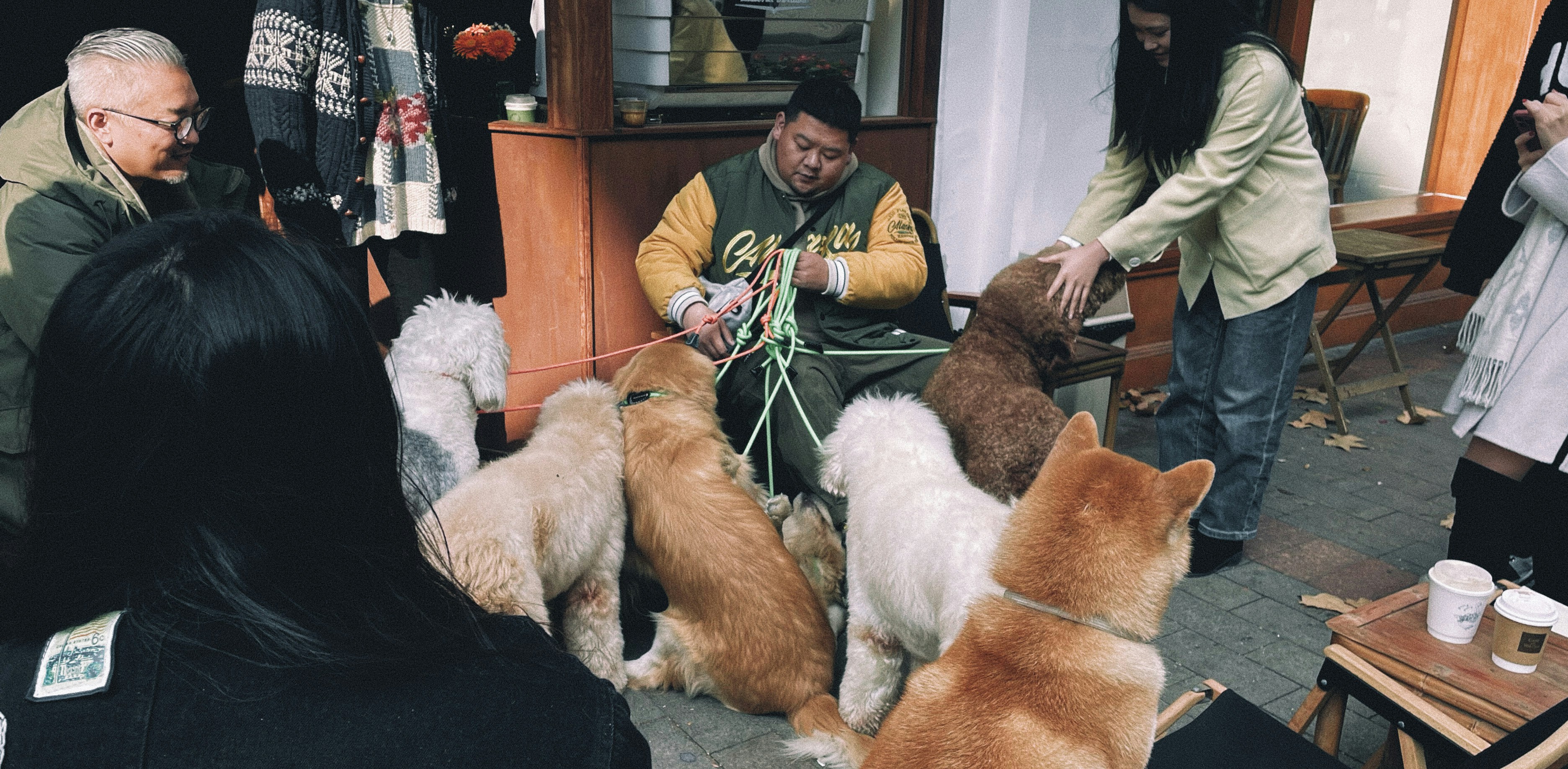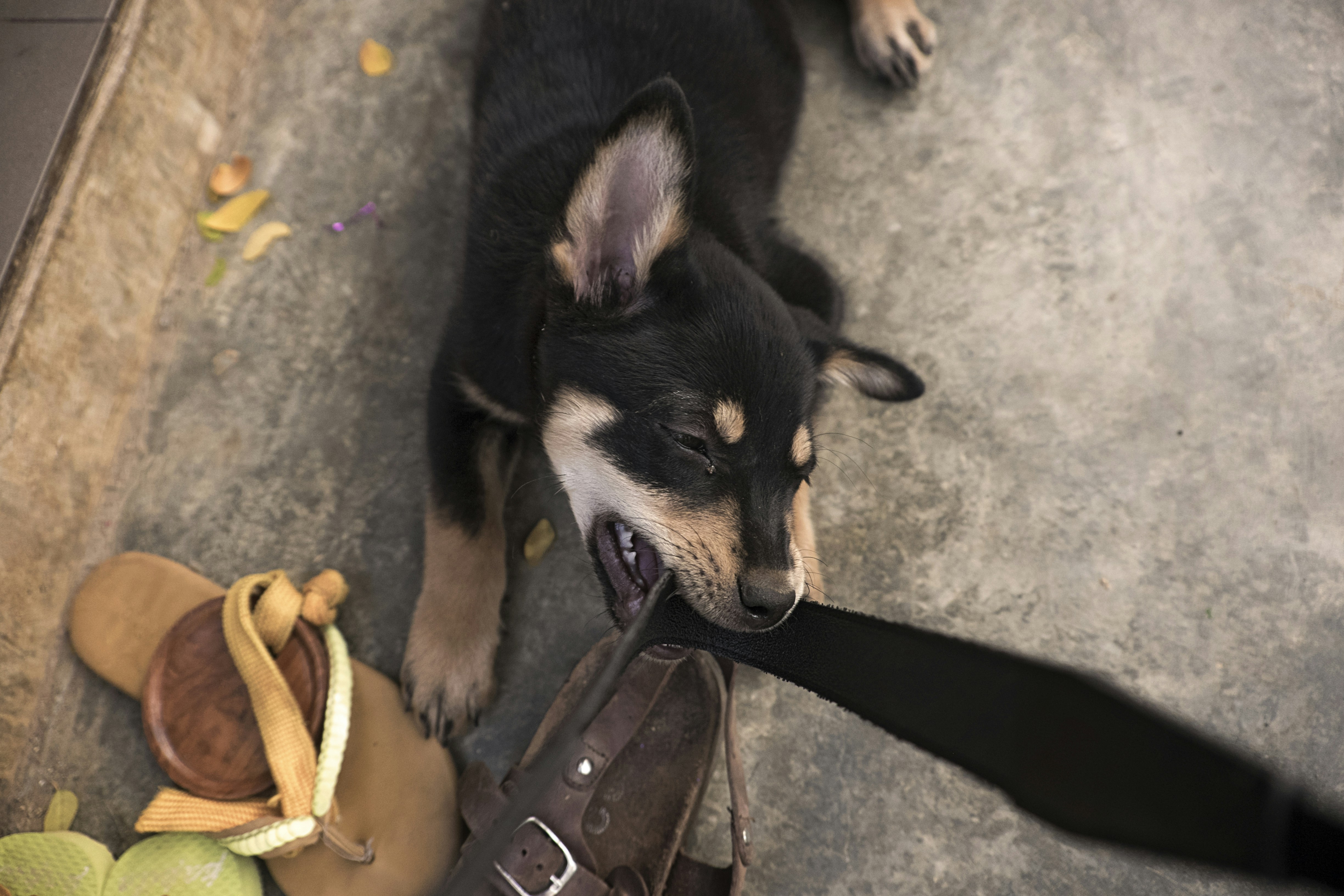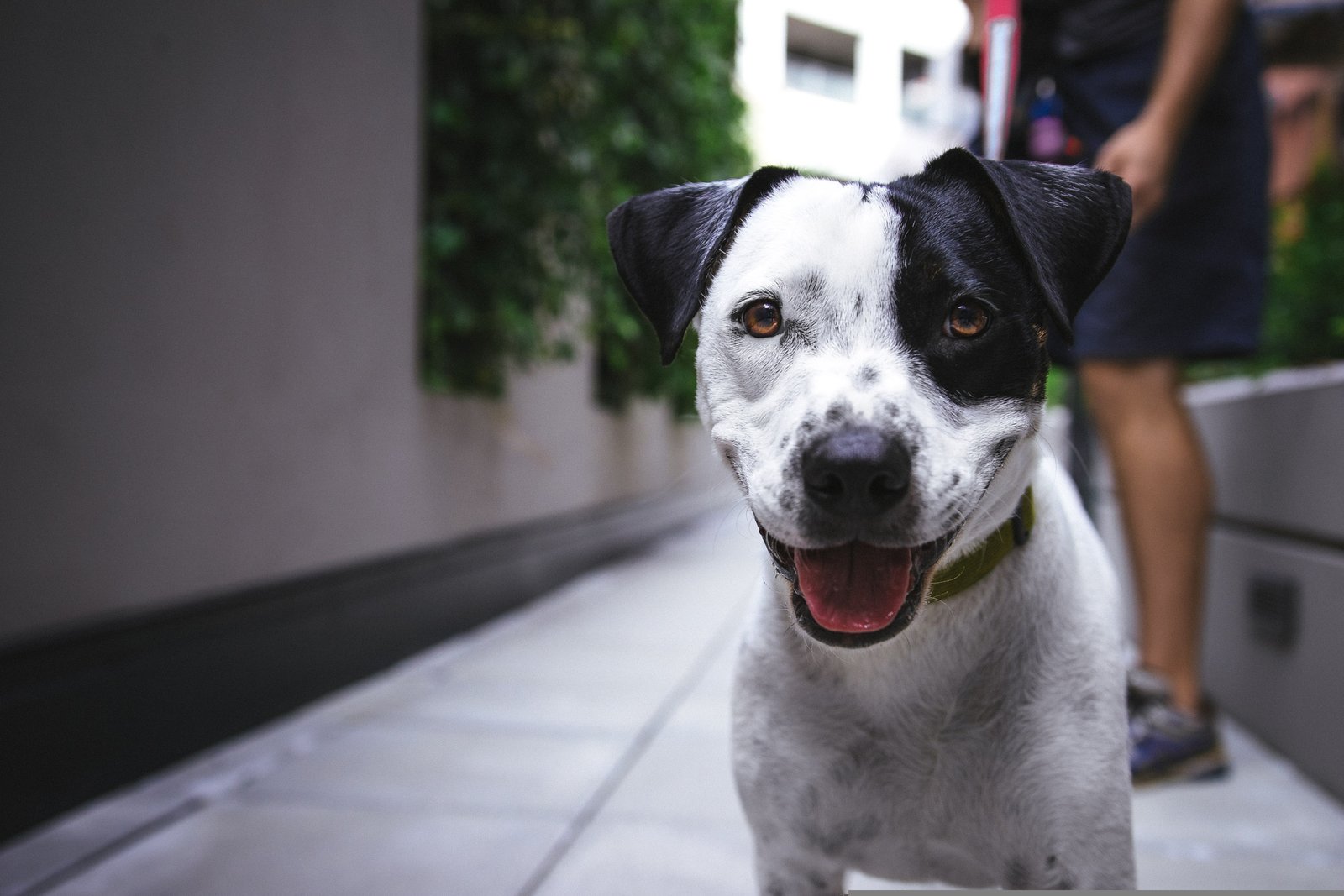
Here is a finding worth sitting with. When researchers showed adults video of a child interacting with a dog and asked them to identify the dog’s emotional state, people who owned dogs performed worse than people who did not.
Experience with a dog, without any theoretical knowledge of dog behavior, appears to be a hindrance rather than a help. Owners learn to read their dog, then generalize confidently to all dogs, and stop looking at the details.
This guide is about those details: what dogs are actually signalling, which signals people reliably miss, and how to read a dog before it has to raise its voice.
Many of these signals are how anxiety first shows itself. See our guide to the five types of dog anxiety.
The scale of the problem
A University of Lincoln study showed video clips of dogs to children and parents, ranging from relaxed dogs through to growling and snarling, and asked them to rate what they saw.
Among three-year-olds, 53% misread growling or snarling. Of the children who got it wrong, 65% thought the dog was happy. And 17% of the parents made the same error.
That is one adult in six looking at a snarling dog and reading it as friendly.
Separate research found that in more than half of potentially risky child and dog interactions, parents did not intervene, though they would have with an unfamiliar dog. Familiarity produces trust, and trust produces inattention.
The encouraging part: this is learnable. After a short video training, 81% of three-year-olds correctly identified snarling and growling as warnings, and 76% still remembered it a year later. If three-year-olds can learn this in one session, so can you.
Read the whole dog, not one part
The most common mistake is reading a single feature. A wagging tail means happy. Ears back means guilty. A yawn means tired.
None of those hold in isolation. Every signal below has to be read against the rest of the body, and against the situation.
Ask three questions each time:
- Is the body loose or stiff? This single distinction carries more information than any other.
- Is the dog moving toward or away? Weight forward or weight back.
- What just happened? The same posture means different things next to a food bowl and in the middle of a game.
The tail: more complicated than you think
A wagging tail is not a friendly tail. Veterinary behaviorists are explicit that dogs may wag when afraid or threatened, so a wag is not a reliable signal that a dog welcomes being approached.
What matters is how the tail moves.
- Loose, sweeping, whole-body wag at mid height: relaxed and friendly. The hips move with it.
- High, stiff, fast, small-amplitude wag: arousal, not friendliness. This is the wag that precedes many bites.
- Low wag with tucked hindquarters: appeasement or fear.
- Tucked hard under the belly: fear.
- Held high and still: alert, assessing, possibly about to escalate.
- Neutral hanging, gently swinging: a genuinely relaxed dog.
The left-right finding
One of the more remarkable results in canine science, and almost nobody outside the field knows it.
Researchers measured tail-wagging angles in 30 dogs and found the wag is biased to one side depending on what the dog is looking at: right-biased when facing their owner, left-biased when facing an unfamiliar, assertive dog. The asymmetry reflects which brain hemisphere is more active, with right bias linked to approach tendencies and left bias to withdrawal.
A follow-up study asked whether dogs themselves notice. They showed dogs video of other dogs wagging with a left or right bias and measured cardiac activity. Dogs watching left-biased wagging showed higher heart rates and more anxious behavior than those watching right-biased wagging.
Dogs are reading an asymmetry we cannot see without a protractor. It is a useful reminder of how much of their communication passes us by.
You will not judge this reliably by eye in real time. The practical lesson is different: a wag is not a green light.
The eyes
Soft eyes: relaxed, blinking normally, no tension around the lids. A comfortable dog.
Hard stare: fixed, unblinking, locked onto a target. One of the most serious signals a dog gives, and one of the most commonly missed because the dog is silent and still. A hard stare paired with a frozen body is a dog at the top of its warning sequence.
Whale eye: the whites visible as a crescent, usually because the dog is turning its head away while keeping its eyes on something. It means I do not want to be here and I am tracking the thing that worries me. It appears constantly in photographs of children hugging dogs, and it is a warning.
Squinting or blinking rapidly: can be appeasement, or discomfort.
Dilated pupils in normal light: arousal or fear.
The mouth
Loose open mouth, relaxed tongue: the closest thing to a dog smile. Comfortable.
Closed, tight mouth with tension at the corners: a dog that has gone on alert. Watch for a relaxed mouth suddenly closing. That transition is information.
Lip-licking with no food present: a stress signal, often very brief.
Yawning out of context: stress, not tiredness.
Panting with no heat or exercise: stress. Look at the shape too. A stressed pant is often faster and shallower, with the corners of the mouth drawn back.
Lifted lip showing front teeth with a wrinkled muzzle: a clear warning.
The submissive grin shows front teeth with a loose, wiggly body and squinting eyes. Genuinely friendly, and often mistaken for aggression. Context separates them: the aggressive display comes with a stiff body, the grin with a wriggling one.
Ears, body and weight
Ears forward: alert and interested. Combined with a stiff body, alert and possibly about to act.
Ears flat back against the skull: fear or appeasement.
Ears slightly back and soft: friendly.
Ear shape complicates this. Heavy drop ears show less, and cropped ears show a permanently forward set. With those dogs, weight the rest of the body more heavily.
Weight forward, leaning in, standing tall: confidence or a readiness to act.
Weight back, lowered body, crouching: fear or avoidance.
Raised hackles are not aggression. They are an involuntary arousal response, like human goosebumps, and they occur with excitement, fear, and conflict alike.
The freeze deserves its own line. A dog that stops moving entirely, even for half a second, is the single most under-read signal in this entire subject. It usually means the dog has run out of other options. Most owners only react once there is a growl.
Reading these signals matters most when a trigger is approaching. See our guide to leash reactivity and threshold distance.
Free tool
Tick the signals you can actually see and get a weighted reading across six states, with a confidence rating.
The escalation sequence
Dogs almost always work through a predictable ladder before biting. Punishing the top of the ladder removes the top rungs, not the reason for climbing.
- Blinking, nose licking, turning the head away
- Turning the body away, sitting, pawing
- Walking away
- Creeping, ears back
- Lying down, leg up
- Stiffening, hard stare
- Growling
- Snapping at the air
- Biting
Steps one to three are so quiet that most people miss them entirely. They are the dog asking politely.
Dogs that appear to bite without warning are almost always dogs whose early signals were repeatedly ignored, or whose growls were punished, so they learned that only the last rungs work. Our guide to why adult dogs bite covers what happens when the warnings are removed.
Vocalization carries the same kind of contextual information, and research shows people can identify a bark’s situation from its sound alone. See what different barks mean.
Displacement behaviors
A normal behavior appearing at an abnormal moment, which signals internal conflict. Once you can spot these, you will see them everywhere.
- Scratching when not itchy
- Shaking off when not wet, often right after a tense moment
- Sudden intense sniffing of the ground with nothing there
- Grooming a paw mid-interaction
- Sudden yawning
- Grabbing a toy and carrying it without playing
The shake-off is the most useful of these. It often marks the end of a stressful episode, like a reset. If your dog shakes off after every greeting with a particular visitor, that greeting is not as comfortable as it looks.
This matters most in the first weeks with a new dog in the house. See how to introduce a second dog.
Play, and how to check it is still play
Real play has recognisable structure: exaggerated, bouncy, inefficient movements; play bows; role reversal where the chaser becomes the chased; self-handicapping where a bigger dog lies down to even things up; and frequent pauses.
Play is going wrong when: one dog is always on the bottom and stops trying to get up, the pauses disappear, the bodies go stiff, one dog is repeatedly trying to leave and is followed, or the movement becomes fast and silent rather than bouncy.
The consent test
Simple, takes three seconds, and settles the question.
Hold both dogs apart briefly, or step between them, then release. If the dog that was underneath comes straight back for more, it was play. If it moves away, shakes off, or hides behind you, it was not.
The same test works for petting. Stroke your dog for three seconds, then stop and take your hand away. A dog that wants more will nudge, paw, or lean in. A dog that stays still or turns away has been tolerating it.
One context deserves particular care: a dog with food, a chew, or a bed. See resource guarding in dogs for the early signals and how to manage them.
This matters most around a dog that is wary of unfamiliar people. See dogs afraid of strangers.
What to teach children
Children misread dogs at high rates, and they are bitten more often than adults for reasons of height and behavior rather than fault.
Keep it to a few rules they can actually remember:
- No hugging, no kissing, no lying on the dog. Hugging in particular is a common trigger for whale eye and freezing.
- Leave the dog alone when it is eating, chewing, or sleeping.
- If the dog walks away, it is finished. Do not follow.
- Stroke the chest or shoulder, not the top of the head.
- Stand still and fold your arms if a dog is too excited.
Adults supervise directly, in the same room. A parent who trusts the family dog and watches from the kitchen is the exact scenario the research describes.
Six situations where owners misread their own dog
The guilty look. Slinking, ears back, avoiding eye contact next to the chewed shoe. This is a response to your posture and tone, not evidence the dog understands what it did twenty minutes ago.
The dog that loves being hugged. Check the photograph. Whale eye, closed tight mouth, head turned away, body stiff. Some dogs genuinely enjoy it; many are tolerating it.
The wagging tail at the vet. High, fast, stiff. Arousal and stress, not delight.
The dog that is fine with the toddler. Look for repeated lip licking, turning away, and leaving the room. Tolerating is not enjoying, and tolerance runs out.
The excited greeting at the door. Sometimes joy, sometimes anxiety that has been building. If your dog also struggles when left, see our guide to separation-related problems.
The dog that is stubborn on walks. A dog that stops, sniffs intensely, and will not move is often over threshold rather than disobedient. See socialization and reactivity.
How to practice
Film your dog. Thirty seconds of an ordinary greeting or a grooming session, watched back at half speed. You will see signals you cannot catch live.
Watch other dogs at a distance and narrate what you see: loose or stiff, forward or back. No sound needed.
Run the consent test once a day for a week. It changes how you handle your own dog more than any amount of reading.
Build a baseline. Know what your dog’s neutral face, ears and tail look like when nothing is happening. Every signal is a deviation from that, and every dog’s baseline is different.
If the signals appear mainly during storms or fireworks, our guide to noise fear in dogs covers what the research says works.
When to get help
Speak to your veterinarian, and ask about a referral to a veterinary behaviorist, if your dog freezes and hard-stares regularly, guards food or resting places, has snapped or bitten, shows a sudden change in how it responds to handling, or if you cannot predict what will set it off.
A sudden change is a medical question first. Pain lowers tolerance for everything, and a dog that has started resenting being touched may be hurting rather than misbehaving.
Watch the training in action
PawMastery on YouTube — 149,000+ subscribers following along with real training sessions.
Frequently asked questions
Does a wagging tail mean a dog is happy?
No. Dogs wag when afraid or aroused too. A loose, sweeping, whole-body wag is friendly; a high, fast, stiff wag is arousal and frequently precedes a bite.
What is whale eye in dogs?
The whites of the eyes showing as a crescent when a dog turns its head away but keeps watching something. It signals discomfort and it is a warning, most often seen when a dog is being hugged or restrained.
Should I punish my dog for growling?
No. A growl is a warning, and punishing it teaches the dog to skip the warning rather than removing the discomfort. You end up with a dog that appears to bite without notice.
Do raised hackles mean my dog is aggressive?
No. Raised hackles are an involuntary arousal response and occur with excitement, fear, and uncertainty. Read the rest of the body.
Why does my dog yawn when it is not tired?
Out-of-context yawning is usually a stress signal. Look at what was happening in the seconds before.
Does my dog feel guilty?
The guilty look is a response to your body language and tone, not an understanding of an earlier act. Dogs do not connect a telling-off to something they did much earlier.
How do I know if my dog enjoys being petted?
Use the consent test. Pet for three seconds, stop, remove your hand. A dog that wants more will move toward you. A dog that stays still or turns away was tolerating it.
Are dog owners better at reading dogs?
Not necessarily. In one study, participants without dogs classified the dogs’ emotional states more successfully than owners did, suggesting that experience without knowledge can work against accurate reading.
Can I teach my child to read dog body language?
Yes, and quickly. After a short video training, 81% of three-year-olds correctly identified growling and snarling as warnings, and most still remembered a year later.
This article covers general canine communication. A sudden change in your dog’s body language, tolerance of handling, or temperament can have a medical cause and warrants a veterinary examination. For growling, snapping, or biting, work with a veterinary behaviorist rather than an article.
Sources
- Siniscalchi et al., left- and right-asymmetric tail wagging and emotional responses in dogs, Current Biology
- Quaranta, Siniscalchi and Vallortigara, asymmetric tail-wagging responses to emotive stimuli, Current Biology
- Meints et al., teaching children and parents to understand dog signalling, University of Lincoln
- Summary of the Lincoln findings on misinterpretation of distress signals
- Caregiver reports of interactions between young children and the family dog, PubMed Central
- NC State College of Veterinary Medicine on reading warning signs
- AVSAB Position Statements on Humane Dog Training